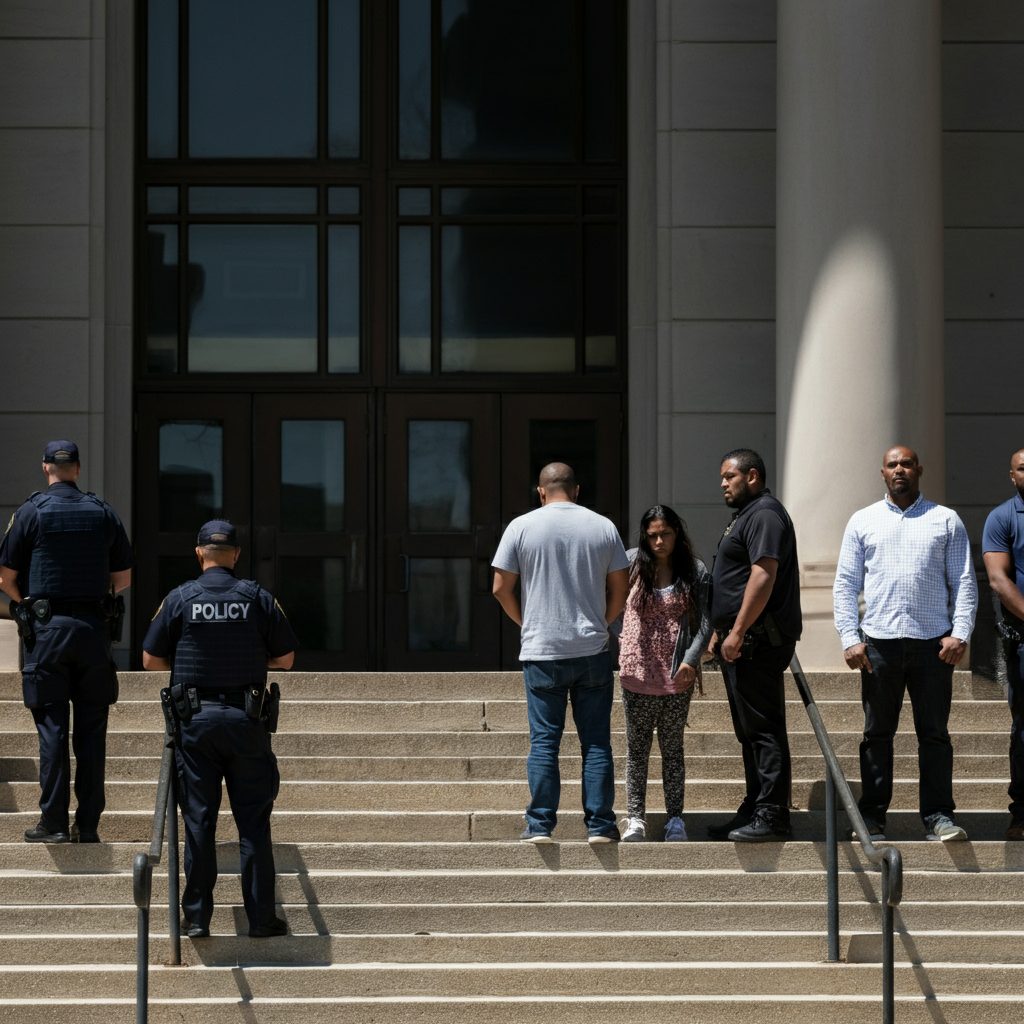
Immigration enforcement has increasingly spilled over into unexpected places, including courthouses. Alarmingly, reports are growing about Immigration and Customs Enforcement (ICE) agents arresting immigrants as they arrive at courthouses for legal proceedings. This practice raises critical questions about justice, safety, and the balance between law enforcement and civil rights.
This blog highlights the troubling implications of ICE’s actions, how they impact immigrants and the legal system, the legal debates surrounding these arrests, and what you can do to support immigration rights.
Why Are Courthouses Becoming Arrest Zones?
ICE agents’ increasing presence at courthouses is no coincidence. Historically, courthouses were considered “sensitive locations,” where ICE rarely conducted arrests. However, under recent policy shifts, this unofficial guideline has eroded, leading to widespread fear.
Courthouses have become a prime target because immigrants appearing for court dates are easy to locate. ICE often justifies this tactic by citing the need to enforce immigration laws and apprehend individuals they see as threats. Yet this strategy has sparked significant concerns about the undermining of the judicial system and basic trust between communities and law enforcement.
The Ripple Effects of Courthouse Arrests
For immigrants, the courthouse should be a place of justice and resolution. Instead, these arrests are creating a “chilling effect” on immigrant communities, discouraging individuals from attending court dates out of fear of deportation.
Impact on Immigrant Communities
- Fear and Distrust: Immigrants are avoiding court appearances, including those where they are the victims of crime or witnesses testifying in a trial. This undermines public safety and fosters further mistrust toward the legal system.
- Family Separation: For those arrested, the result can often be devastating. Families are left without parents or breadwinners as individuals are swiftly funneled into detention centers.
- Loss of Rights: Skipping court dates due to fear of arrest can lead to legal consequences, compounding vulnerabilities.
Impact on the Judicial System
- Access to Justice Diminished: Cases involving immigrants are harder to resolve when individuals fail to appear in court. Victims and witnesses fear engagement with the system.
- Overburdened Courts: Delayed hearings and unresolved matters create inefficiencies, slowing down justice for everyone involved.
- Erosion of Credibility: The judicial system loses its reputation as a neutral and protective institution when individuals fear it could lead to their deportation.
Legal Perspectives Creating a Contentious Debate
The legality of ICE’s courthouse arrests is a complex and contentious issue. Opinions on this matter vary widely, often reflecting differing interpretations of law and human rights.
Arguments Supporting ICE’s Actions
- Law Enforcement Authority: Advocates argue that ICE has the authority to enforce immigration laws anywhere, including courthouses.
- Public Safety: Some claim these operations target individuals deemed threats to national security or public safety.
- Efficiency: Courthouses provide a predictable location to apprehend individuals without large-scale search efforts.
Arguments Against ICE’s Actions
- Violation of Legal Norms: Critics argue that the practice undermines due process and discourages participation in the legal system.
- Sensitive Spaces: Many believe courthouses should be off-limits, akin to schools and hospitals, to preserve public trust.
- Endangerment of Public Safety: Law enforcement officials and district attorneys in cities like New York and Los Angeles have spoken out, stating that these arrests erode immigrant cooperation in legal matters, making communities less safe.
Recently, lawmakers and advocacy organizations have pushed for legislation to officially designate courthouses as sensitive locations, which would prohibit ICE arrests. While some states have implemented such laws, uniform federal protections remain absent.
Building a Path Toward Justice
This issue highlights the critical intersection of immigration policy, justice, and human rights. If these developments concern you, there are several ways you can make a meaningful difference.
Learn More
Educating yourself about the realities of immigration enforcement and laws is the first step. Take the time to understand how these policies impact individuals, families, and the broader community.
Support Impactful Organizations
Many organizations are actively working to protect immigrant rights. By supporting them, you can help ensure that individuals are safe and treated justly. Here are a few to consider:
- American Civil Liberties Union (ACLU): Historically active in protecting immigrant rights and challenging unfair practices in court.
- National Immigration Law Center (NILC): Focused on defending and advancing immigrant rights through policy advocacy.
- Immigrant Defense Project (IDP): Provides resources and legal counsel to immigrants navigating the legal and immigration systems.
Spread Awareness
Share what you’ve learned with your network. Amplifying stories, reports, and advocacy efforts can help shine a light on this issue.
Contact Lawmakers
Advocate for policies that prohibit ICE arrests at courthouses. Legislative action is key to securing long-term protections for immigrant communities.
Act Now to Protect Equal Justice
The increasing presence of ICE at courthouses represents more than an immigration issue. It’s a challenge to the fundamental principles of justice, fairness, and humanity. No one should fear accessing the legal system.
Whether you engage by learning, supporting organizations, or advocating for change, your contributions are vital. Together, we can work toward a society where justice and fairness are accessible to everyone, regardless of immigration status.
If you’re ready to take action, start by exploring resources from the incredible organizations listed above. Together, we can ensure that courthouses remain places of justice—not fear.