
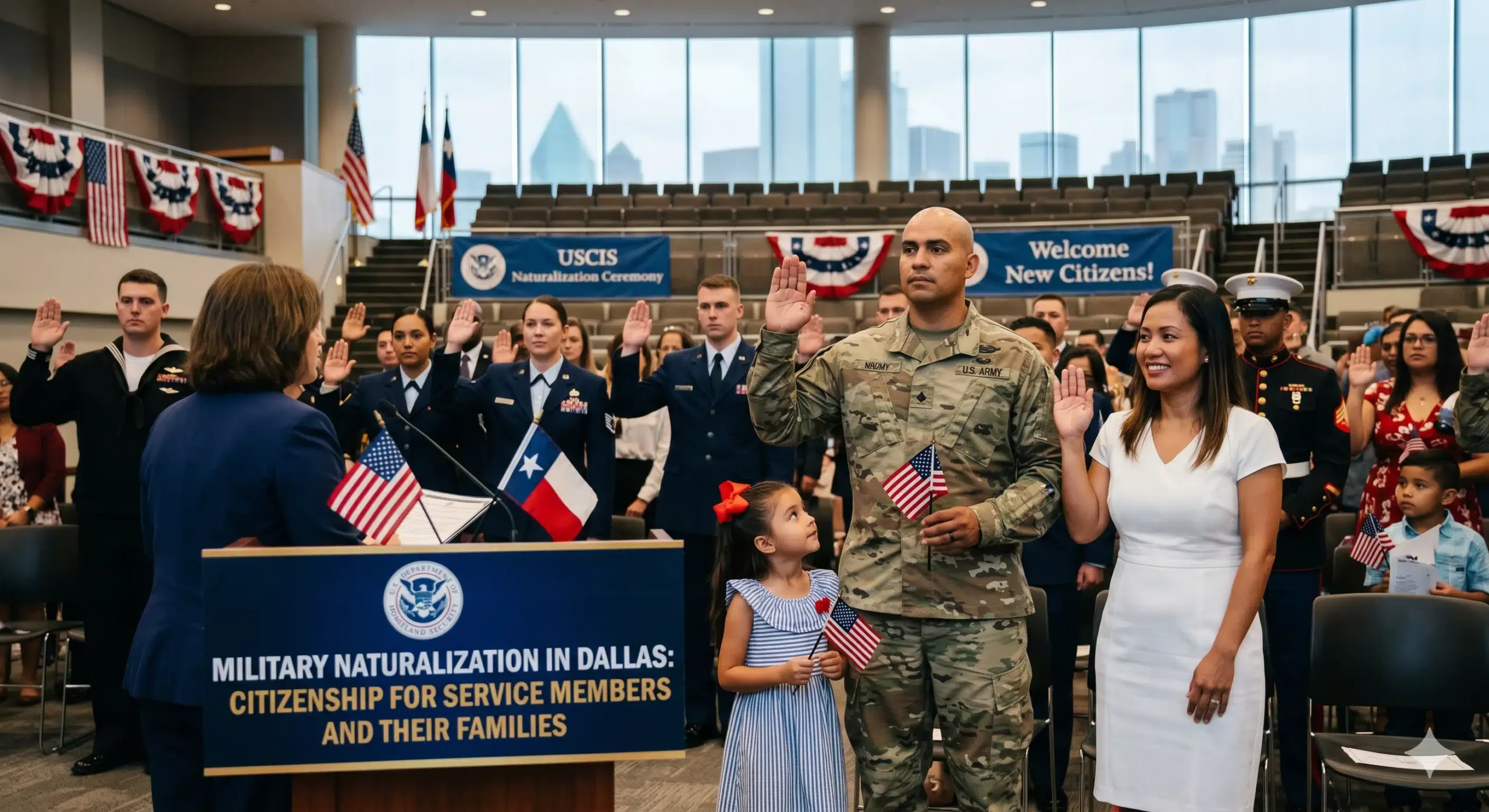
Service in the U.S. armed forces can open a faster, more flexible path to citizenship. Congress has long recognized military service with special naturalization rules — and in some cases, those benefits extend to a service member’s spouse and children. This guide explains how military naturalization works.
If you or a family member serves in the military and you’re pursuing citizenship from the Dallas area, an experienced Dallas Immigration Attorney can help you understand and use these benefits.
How is military naturalization different?
Members of the U.S. armed forces may qualify for citizenship under rules that can be more generous than the standard process — for example, with reduced or waived residence requirements depending on the type and timing of service. The exact benefits depend on whether the service was during peacetime or a designated period of hostilities. The official starting point for these benefits is the USCIS military page at uscis.gov/military.
The Piri Law Firm, located downtown at 2001 Ross Ave, Suite 700, in Dallas, TX 75201, assists service members and families with citizenship as part of its immigration services.
Who qualifies for military-based naturalization?
In general, current and recently separated members of the armed forces who meet the service and character requirements may qualify, often without the usual continuous-residence period required of civilian applicants. Specific eligibility depends on the nature and length of service, so confirming the details for your situation is important.
Can a service member’s family benefit too?
Sometimes, yes. Certain spouses and children of U.S. service members may have expedited or overseas options that aren’t available to most civilian applicants — particularly when the service member is stationed abroad. These rules are specific and worth reviewing with an attorney, especially for families facing deployments or relocations.
What does the naturalization process involve?
Like civilian cases, military naturalization generally involves an application, biometrics, an interview, and English and civics testing, followed by the Oath of Allegiance — though some steps can be adapted for those in service or stationed abroad. Honesty and complete documentation remain essential. For civilian citizenship questions, the firm’s general immigration practice areas page offers related information.
What can complicate a military naturalization case?
Issues such as certain criminal history, problems with the discharge characterization, or gaps in documentation can complicate a case. Because some issues carry serious consequences, anyone with a complicated record should speak with an attorney before filing rather than risk a denial.
Why work with a local Dallas firm?
Military families face unique timing and location challenges, and an attentive attorney can help you plan around them. The Piri Law Firm emphasizes personalized attention so you’re never just a case number, a commitment to honoring service through careful representation, and clear communication so you always know where your case stands. The downtown Ross Avenue office is centrally located and convenient to the surrounding area.
How do I get started?
The first step is a consultation, where an attorney can confirm which military benefits apply. To schedule with The Piri Law Firm, call (214) 509-7924 or visit 2001 Ross Ave, Suite 700, Dallas, TX 75201.
Frequently Asked Questions
Does military service speed up citizenship? It can. Military naturalization rules may reduce or waive some requirements that apply to civilian applicants, depending on the type and timing of service.
Can my spouse become a citizen faster because I serve? Possibly. Certain spouses and children of service members may have expedited or overseas options, especially when the service member is stationed abroad.
Do I still have to take the civics and English tests? Generally yes, though some steps can be adapted for those in service or stationed abroad. An attorney can explain what applies to you.
Does the firm serve Spanish-speaking clients? Yes. The firm exclusively serves the Latin community and provides guidance in a culturally familiar, accessible way.
How much does a military naturalization case cost? Some military applicants benefit from fee exemptions; attorney fees depend on the case. A consultation is the best way to understand the total.
This article is general information, not legal advice. The Piri Law Firm | Attorney Michael Piri (Texas Bar No. 24096771) | 2001 Ross Ave, Suite 700, Dallas, TX 75201 | (214) 509-7924