What evidence should be preserved after a commercial truck accident?
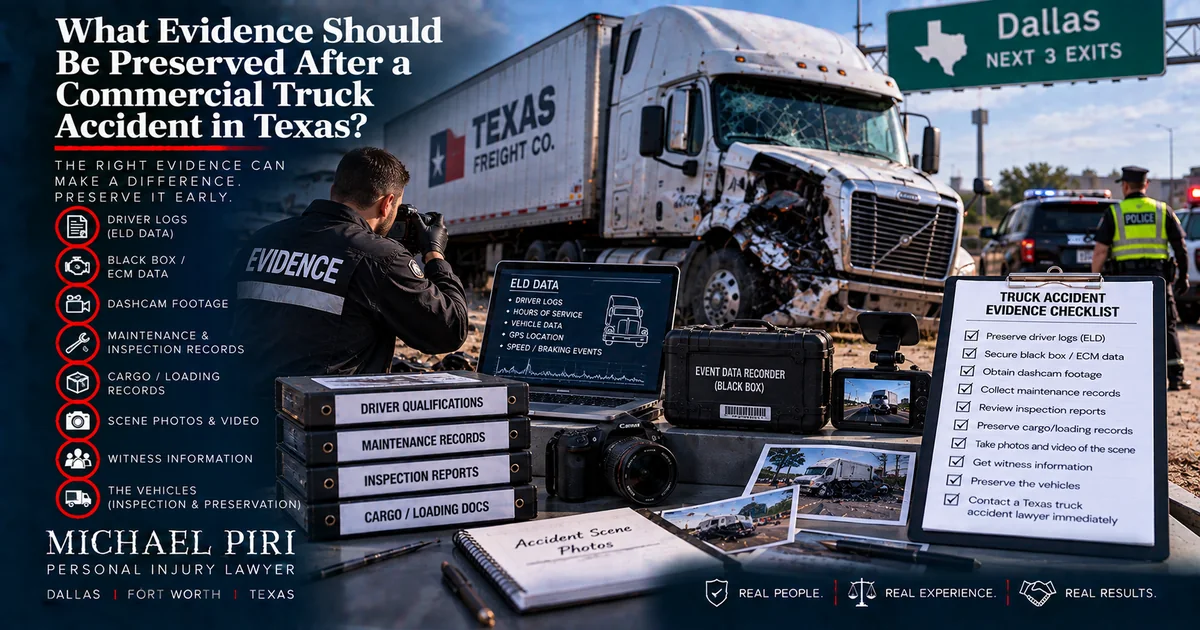
Important evidence after a commercial truck accident can include photographs and video, the vehicles themselves, electronic vehicle data, driver logs, dash-camera footage, dispatch communications, inspection and maintenance records, driver qualification materials, cargo records, witness information and medical documentation. Because some commercial records and electronic data may be overwritten or routinely discarded, timely preservation can be important.
Why Truck Accident Evidence Can Be Different
Commercial trucking operations generate records that may not exist in an ordinary passenger-car collision. Those records can help establish how the vehicle was operated, maintained and dispatched before the crash.
The relevant evidence depends on the allegations. Not every truck case requires every category of record.
Photographs and Video From the Scene
Scene photographs can document vehicle positions, road conditions, debris, tire marks, cargo, traffic controls and impact damage.
Video may come from dash cameras, nearby businesses, residences or other vehicles.
The Tractor, Trailer and Other Vehicles
The vehicles themselves can be evidence. Damage patterns, tires, brakes, lights, coupling systems and other components may require inspection in appropriate cases.
Repairs, salvage or destruction can alter that evidence, which is why vehicle preservation may matter after a serious collision.
Electronic Vehicle Data
Commercial vehicles may contain electronic systems that record operational information. Depending on the equipment, potentially relevant data may concern speed, braking, engine operation or other events.
The type and availability of data vary by vehicle and system.
Electronic Logging Information
Commercial drivers subject to hours-of-service requirements may use electronic logging devices. Relevant records can assist in evaluating driving and duty periods when fatigue or compliance is an issue.
Dash-Camera Footage
Many commercial fleets use forward-facing or driver-facing cameras. Recordings can sometimes provide direct evidence of traffic conditions or events surrounding a collision.
Retention practices vary, so potentially relevant footage should be identified promptly.
Dispatch and Communication Records
Dispatch systems, messages and trip records may show routes, assignments, timing and communications between a driver and company.
These records can be particularly relevant when operational pressure, scheduling or company instructions are disputed.
Inspection and Maintenance Records
When mechanical condition is relevant, records concerning inspections, repairs, tires, brakes and maintenance history may need to be examined.
Driver Qualification and Employment Records
Depending on the claims and applicable rules, driver qualification, training, employment or disciplinary information may become relevant.
Cargo and Shipping Documents
If loading, weight, cargo shift or securement may have contributed to the collision, bills of lading, loading records and other cargo documentation can help identify the parties and circumstances involved.
Preservation Does Not Mean Altering Evidence
Relevant evidence should be preserved in its original form when possible. Do not manipulate electronic files or alter physical evidence in a way that compromises authenticity.
For more information about these claims, see the firm’s Dallas commercial vehicle accident page, Dallas truck accident page, and Fort Worth truck accident page.
Frequently Asked Questions
Can electronic truck data be overwritten?
Some electronic systems have limited storage or changing data-retention characteristics. The specific equipment should be identified to determine what information may exist.
Why preserve the actual truck?
Physical inspection may be relevant when damage, mechanical condition or vehicle components are disputed.
Are driver logs always relevant?
Not necessarily. Their relevance depends on the circumstances, including whether driver hours, fatigue or regulatory compliance are disputed.
Can a preservation request stop all evidence from disappearing?
No process can guarantee that every piece of evidence exists or will be recoverable, but timely and legally appropriate preservation efforts can reduce the risk of relevant information being lost.
Preserving Evidence After a Commercial Truck Collision
The Piri Law Firm can investigate commercial-vehicle accidents and identify records, electronic information and physical evidence that may be relevant to the claim.
This article provides general information and is not legal advice. Evidence and preservation obligations depend on the circumstances and procedural posture of each case.