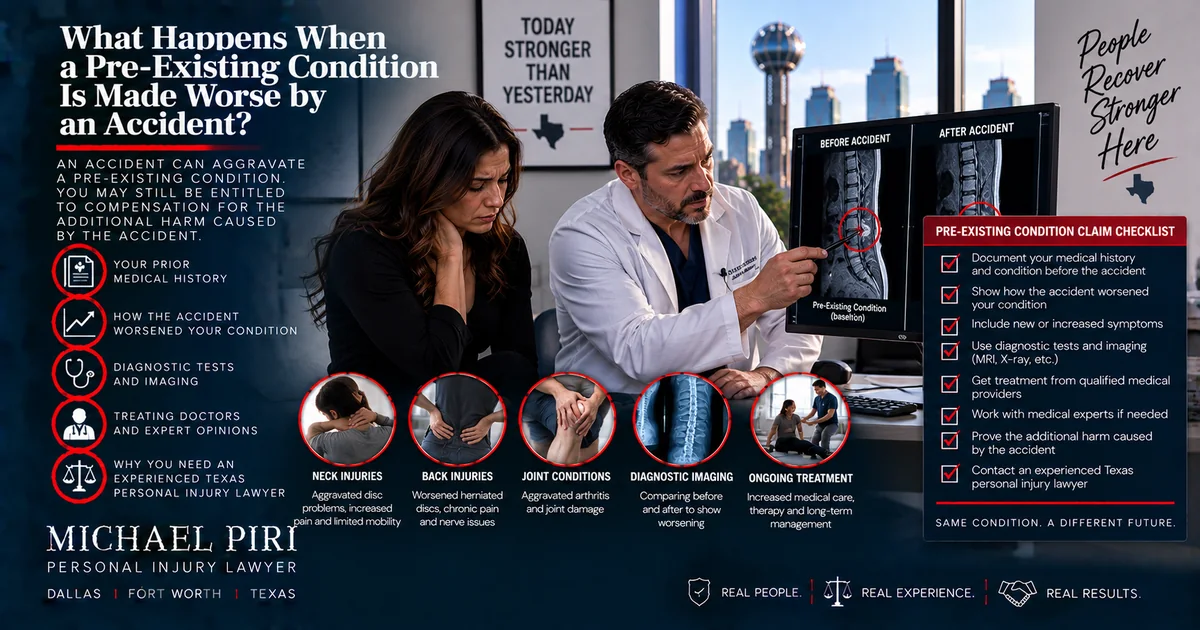
What happens when a pre-existing condition is made worse by an accident?
A pre-existing condition does not automatically prevent a Texas personal injury claim. The important question is whether the accident caused a new injury or aggravated an existing condition and what additional harm resulted. Medical records from before and after the accident can be especially important in separating prior symptoms from accident-related changes.
What Is a Pre-Existing Condition?
A pre-existing condition is a medical condition, injury or symptom that existed before the accident at issue.
Examples can include prior back or neck problems, arthritis, previous surgery, an earlier collision or other medical conditions affecting the same part of the body.
Does a Prior Injury Automatically Defeat the New Claim?
No. A person does not have to be in perfect health before an accident to have a potential injury claim.
However, the claimant must still prove what harm was caused or aggravated by the new occurrence.
Why Are Earlier Medical Records Important?
Prior records can establish the person’s baseline condition before the accident.
For example, they may show whether symptoms had resolved, whether treatment was ongoing, what physical limitations existed and whether diagnostic findings were already present.
Why Are Post-Accident Records Important?
Records after the accident may show new symptoms, increased severity, new objective findings, different treatment, new restrictions or additional procedures.
Comparing the medical history before and after the event can therefore be central to causation.
Should You Hide a Previous Injury?
No. Accuracy is important. Prior medical information can often be discovered during a claim or lawsuit.
An inaccurate denial of a documented prior condition can create a credibility problem that is separate from the medical merits of the claim.
What Does Aggravation Mean?
In general terms, aggravation concerns a worsening of an existing condition caused by the new event.
The legal and medical question is what additional injury or impairment is attributable to the accident rather than simply what existed beforehand.
Can an Insurance Company Blame Everything on the Prior Condition?
An insurer may dispute causation when a person has a significant medical history. That does not resolve the issue automatically.
Treating records, imaging, expert opinions, symptom history and evidence concerning the person’s functioning before and after the accident may help evaluate the dispute.
What If You Were Symptom-Free Before the Accident?
A documented period without symptoms or treatment may be relevant, although each case depends on its medical evidence.
The timing and nature of symptoms after the accident can also matter.
For additional information, see the firm’s Dallas personal injury and Fort Worth personal injury resources.
Frequently Asked Questions
Can I make a claim if I already had back pain?
Potentially. The issue may be whether the accident caused a new injury or worsened the prior condition and what additional harm can be proven.
Will the insurer obtain my old medical records?
Prior records can become relevant when a pre-existing condition is disputed. The proper scope of medical discovery depends on the claim and procedural circumstances.
Should I tell my doctor about my prior condition?
Provide healthcare professionals with an accurate medical history so they can evaluate changes in symptoms and treatment appropriately.
Can an old injury and a new injury affect the same body part?
Yes. Medical evidence may be needed to distinguish the prior condition from new or aggravated injury.
Did an Accident Worsen an Existing Condition?
The Piri Law Firm can evaluate medical history, accident-related changes and causation evidence in a Texas personal injury claim.
This article provides general information and is not legal advice. Medical causation and recoverable damages depend on the evidence and circumstances of each case.