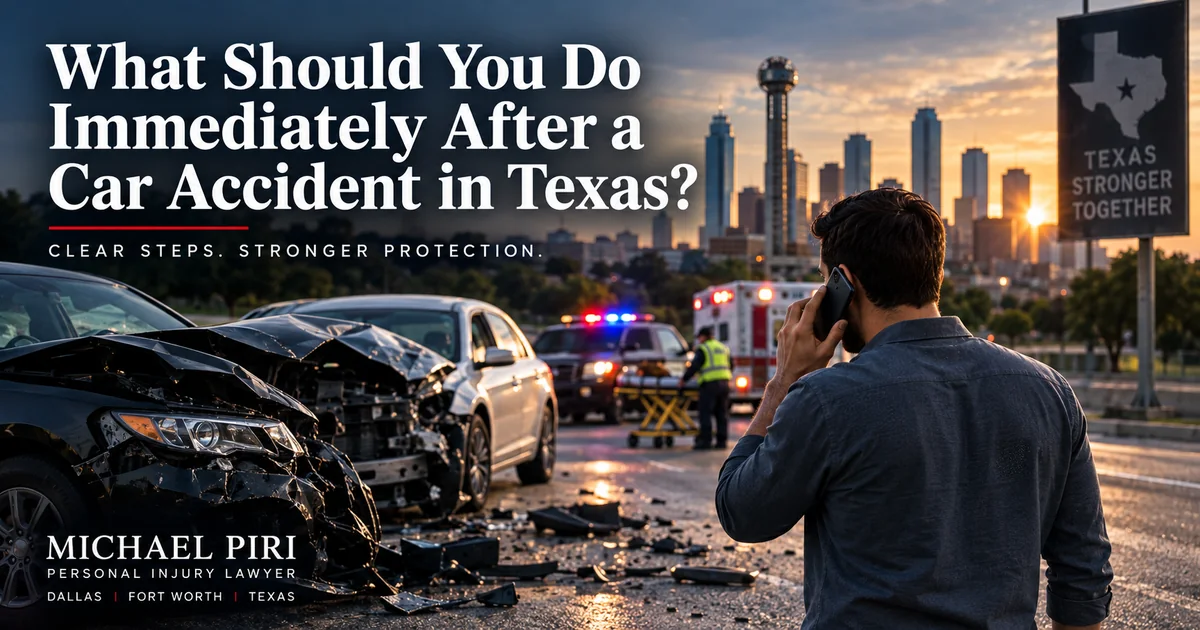
What should you do immediately after a car accident in Texas?
After a Texas car accident, protect yourself from further danger, call 911 when the crash involves injuries or a vehicle that cannot be safely driven, get appropriate medical care, exchange required information, document the scene if you can do so safely, identify witnesses, and promptly notify your insurer. Avoid guessing about fault or giving unnecessary recorded statements before you understand your injuries and the facts of the collision.
What Should You Do First After a Texas Car Accident?
The minutes after a collision can be confusing. Your first priority should be safety rather than determining who caused the crash.
If anyone appears injured, request emergency medical assistance. Texas Transportation Code Chapter 550 imposes duties on drivers involved in qualifying collisions, including stopping, exchanging specified information and providing reasonable assistance to an injured person when necessary.
If the vehicles can be moved safely and Texas law requires them to be moved from a freeway travel area, follow the directions of law enforcement and avoid creating an additional traffic hazard.
Call Police When the Accident Involves Injuries or a Disabled Vehicle
Texas law requires immediate notice to the appropriate law-enforcement agency when a collision results in injury or death or damages a vehicle so that it cannot be normally and safely driven.
A responding officer can investigate the collision and, when the statutory reporting requirements are met, prepare a Texas Peace Officer’s Crash Report. That report may later provide important identifying and factual information, although it does not by itself determine civil liability.
Get Medical Attention
Some injuries are obvious immediately. Others may become noticeable later. If you are experiencing pain, dizziness, numbness, confusion, difficulty moving, or other symptoms, seek appropriate medical evaluation.
Medical records can also document when symptoms were reported, what testing was performed, the diagnosis, recommended treatment and whether additional care was necessary.
Exchange the Required Information
Drivers involved in a qualifying Texas collision generally must provide information such as their name and address, vehicle registration information and liability insurer. A driver’s license must also be shown when requested and available under the circumstances specified by Texas law.
When possible, record or photograph:
- The other driver’s name and contact information
- Driver’s license information
- License plate and vehicle information
- Insurance company and policy information
- Names and contact information for witnesses
- The responding police agency and report number
Photograph the Accident Scene
If it is safe to do so, photographs and video can preserve conditions that may disappear within minutes or hours.
Useful documentation can include vehicle positions, impact damage, skid or tire marks, debris, traffic signals, lane markings, road conditions, construction zones, nearby businesses, weather conditions and visible injuries.
Do not put yourself in traffic or another dangerous location simply to obtain photographs.
Look for Independent Witnesses
An independent witness may have seen something neither driver noticed. Obtain names and contact information when possible.
Nearby businesses, homes, commercial vehicles or intersections may also have surveillance or dash-camera footage. Some systems overwrite recordings quickly, which is one reason early evidence preservation can matter.
Be Careful About Statements Concerning Fault
Cooperate with law enforcement and provide accurate factual information. At the same time, avoid guessing about speed, distance, injuries or events you did not actually observe.
A person can be shaken immediately after a collision and may not yet know all of the facts. Liability may depend on physical evidence, witness statements, electronic data and other information gathered later.
Notify Your Insurance Company
Your policy may require prompt notice of a collision. Provide accurate basic information, but understand the difference between reporting an accident and providing a detailed recorded statement about disputed liability or injuries.
If another insurance company contacts you, remember that its adjuster is evaluating a claim against its insured. You are not required to speculate about your medical prognosis or minimize symptoms you are still evaluating.
Preserve Accident-Related Documents
Create a file containing photographs, medical records, bills, prescriptions, towing receipts, repair estimates, rental-car expenses, correspondence with insurers and employment records relating to missed work.
Keeping this material organized can make it easier to determine the financial and medical impact of the collision.
What If the Accident Happened in Dallas?
People injured in Dallas can review information about Dallas car accident claims and the firm’s broader Dallas personal injury practice.
If an in-person consultation is appropriate, information about the firm’s Dallas office is available at 2001 Ross Avenue in Dallas.
What If the Accident Happened in Fort Worth?
For collisions in Tarrant County, see the firm’s Fort Worth personal injury information. The firm’s Fort Worth office is located at 308 W Kellis St, Fort Worth, Texas 76115.
Frequently Asked Questions
Should I call police after a minor accident in Texas?
Texas law specifically requires immediate notice to law enforcement when a collision results in injury or death or damages a vehicle so that it cannot be normally and safely driven. Even when those circumstances are not apparent, documenting the collision and exchanging accurate information can be important.
Should I go to the doctor if I feel pain later?
If symptoms develop after the collision, obtain appropriate medical care rather than assuming the symptoms will disappear. A healthcare professional can evaluate whether testing or treatment is necessary.
Should I give the other driver’s insurer a recorded statement?
You should be cautious about giving a detailed recorded statement to an adverse insurer before you understand the collision and your injuries. Your own insurance policy may contain separate cooperation requirements.
What evidence should I keep after a car accident?
Keep photographs, videos, witness information, the crash-report information, medical records, bills, repair records, insurance correspondence and documents showing lost income or other accident-related expenses.
Questions After a Texas Car Accident?
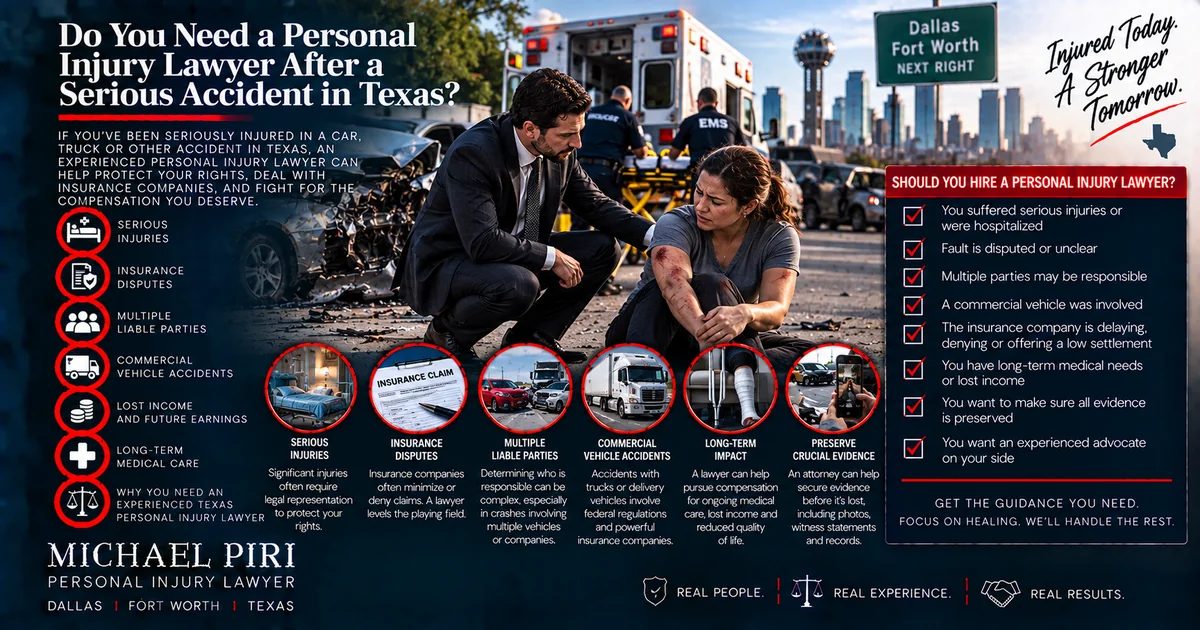
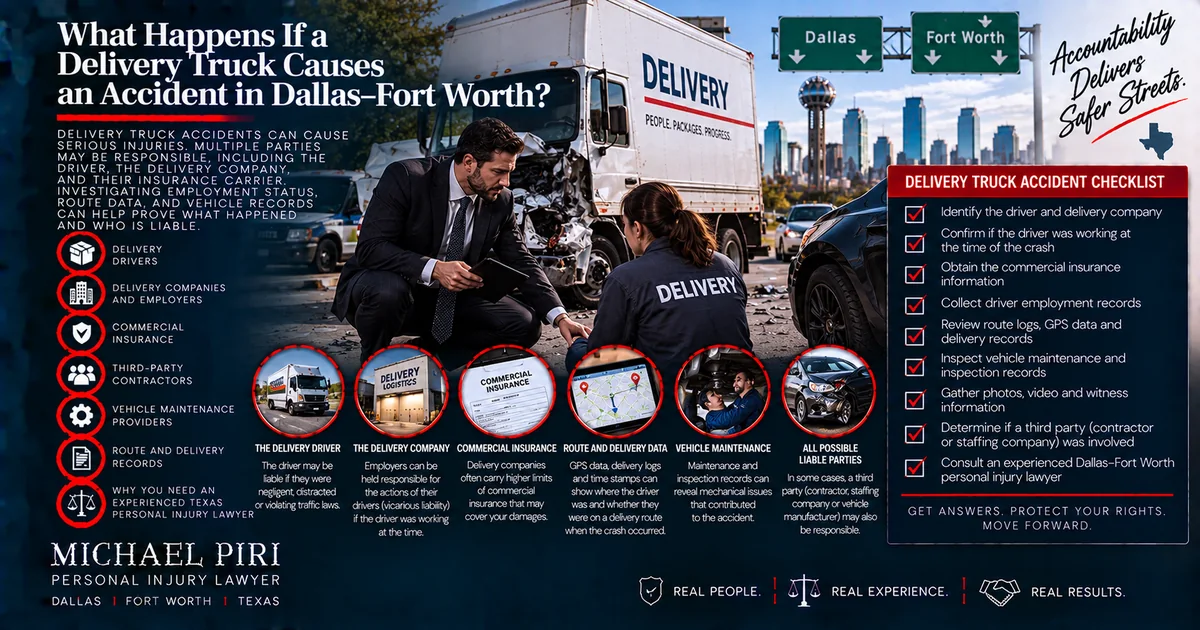
The Piri Law Firm represents people injured in motor-vehicle accidents. A consultation can help you understand potential claims, insurance coverage, evidence and applicable deadlines.
This article provides general information about Texas law and is not legal advice. The facts and deadlines applicable to a particular claim can differ.