Applying for asylum in the United States is one of the most complex legal journeys a person can take. For many, the terminology alone is overwhelming. You might hear terms like “affirmative” and “defensive” tossed around by lawyers or community members, but understanding exactly what they mean—and which one applies to you—is vital for your case.
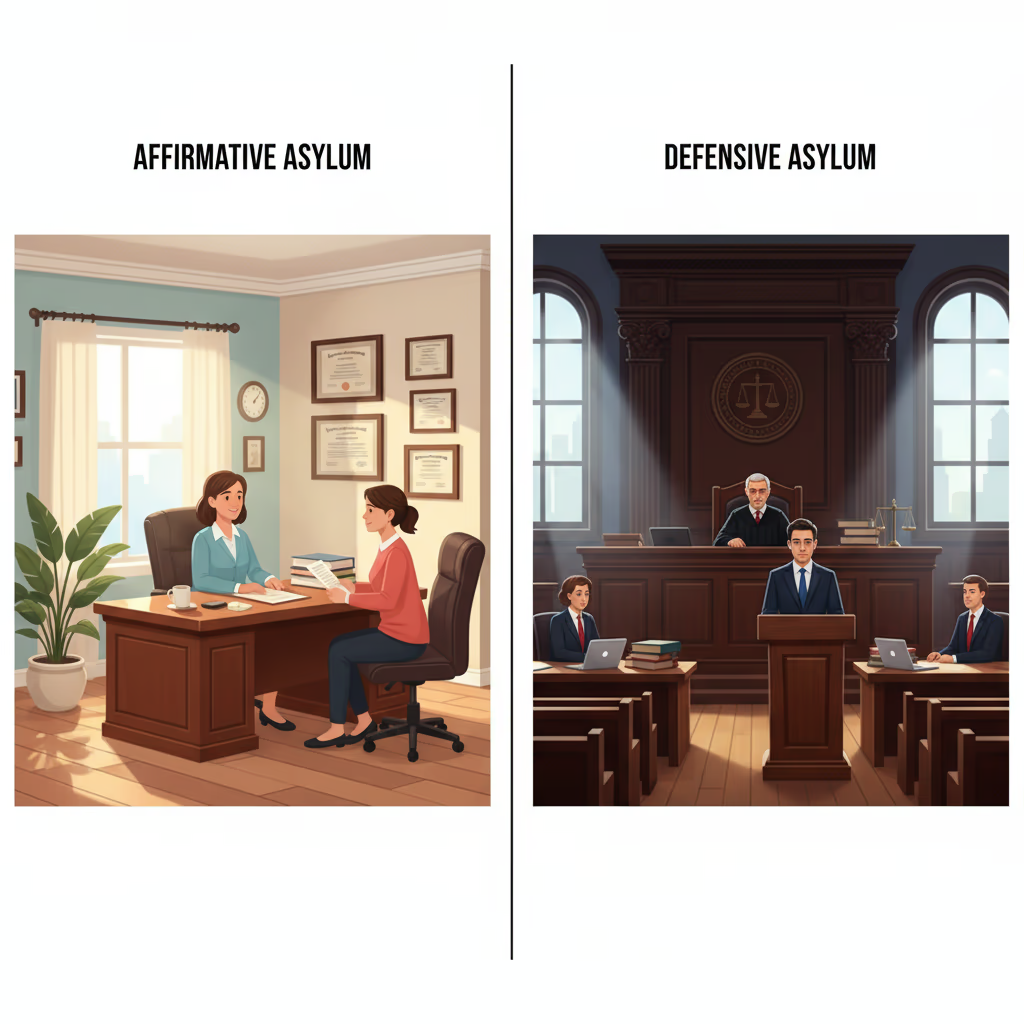
While both paths lead to the same goal—permanent protection in the U.S.—they look very different in practice. One happens in a quiet office; the other happens in a courtroom. One feels like an interview; the other feels like a trial.
This guide explains the distinct differences between affirmative asylum and defensive asylum, how asylum eligibility is determined, and why the setting of your case matters for your approval chances.
Overview of Asylum in the U.S.
At its core, asylum is a form of protection granted to foreign nationals already in the United States who meet the international definition of a “refugee.”
Regardless of which process you go through, the fundamental legal standard remains the same. To win asylum, you must prove that you are unable or unwilling to return to your home country because of persecution or a well-founded fear of future persecution on account of:
- Race
- Religion
- Nationality
- Membership in a particular social group
- Political opinion
While the definition of a refugee is constant, the procedural path you take depends entirely on your current immigration status and whether the government has already started removal proceedings against you.
What Is Affirmative Asylum?
Affirmative asylum is the process for people who are not currently in removal proceedings. This typically applies to individuals who entered the U.S. on a valid visa (like a student or tourist visa) or those who entered without inspection but have not yet been apprehended by immigration authorities.
How the Process Works
In the affirmative process, you take the initiative. You voluntarily file Form I-589, Application for Asylum and for Withholding of Removal, with U.S. Citizenship and Immigration Services (USCIS), a division of the Department of Homeland Security.
This process is generally non-adversarial. You will have an interview with an asylum officer in a private office. The officer is not a judge and there is no prosecutor trying to argue against you. Their goal is to hear your story, review your evidence, and determine if you meet the eligibility criteria.
If the asylum officer approves your application, you are granted asylum. If they do not approve it and you do not have legal status, they refer your case to the immigration court, where it becomes a defensive asylum case.
What Is Defensive Asylum?
Defensive asylum occurs when you request asylum as a defense against deportation. You are essentially saying, “Please do not deport me because I will be harmed if I return home.”
This process applies to individuals who:
- Are already in removal proceedings with the Executive Office for Immigration Review (EOIR).
- Were apprehended at the border and determined to have a “credible fear” of persecution.
- Were referred to an immigration judge by an asylum officer after an affirmative interview.
The Role of Immigration Court
Unlike the affirmative interview, the defensive process takes place in immigration court. It is adversarial. An Immigration Judge decides your case, and an attorney from Immigration and Customs Enforcement (ICE) represents the U.S. government.
The ICE attorney operates much like a prosecutor. Their job is to cross-examine you, question your evidence, and argue why you should be deported. This makes the defensive process significantly more intense and formal than the affirmative process.
Key Differences at a Glance
Understanding these distinctions helps you prepare mentally and legally for what lies ahead.
1. The Decision Maker
- Affirmative: A USCIS asylum officer decides your case. They are trained specifically in asylum law and country conditions.
- Defensive: An Immigration Judge decides your case. While they are experts in immigration law, they handle all types of deportation cases, not just asylum.
2. The Setting
- Affirmative: A private office. An interpreter is provided by the government if needed (though policies on this can change, so always check current requirements).
- Defensive: A public courtroom. You, your lawyer, the government attorney, and the judge are present. Interpretation is provided by the court.
3. The Outcome of Denial
- Affirmative: If denied and you have no legal status, your case is simply moved to immigration court. You get a “second chance” to prove your case to a judge.
- Defensive: If the judge denies your case, the result is usually an order of removal (deportation). Your only option then is to appeal to the Board of Immigration Appeals (BIA), which is a lengthy and difficult process.
Determining Asylum Eligibility
Whether you are in an office or a courtroom, asylum eligibility hinges on credibility and evidence.
In both settings, you must provide:
- Detailed Testimony: Your story must be consistent. Small contradictions can lead to a denial, especially in immigration court where a government attorney will actively look for holes in your story.
- Corroborating Evidence: This includes police reports, medical records, or affidavits from witnesses.
- Country Conditions: You must show that the government in your home country is either the persecutor or unable to control the group persecuting you.
While the legal standard is identical, the burden often feels heavier in defensive asylum because of the courtroom environment. You must withstand aggressive questioning while maintaining your composure and consistency.
Actionable Advice for Navigating the Process
If you are unsure which path applies to you, consider these steps:
- Check Your Status: If you have received a Notice to Appear (NTA), you are in removal proceedings and must pursue defensive asylum. If you have not received an NTA, you likely qualify for affirmative filing.
- Watch the Clock: You generally must apply for asylum within one year of your last arrival in the United States, regardless of whether you file affirmatively or defensively. Missing this one-year deadline is a major barrier to approval.
- Get Legal Representation: This is crucial for defensive asylum. Statistics show that asylum seekers with legal representation are far more likely to win their cases than those without. The complexity of courtroom procedure makes self-representation incredibly risky.
Conclusion
The difference between defensive and affirmative asylum is more than just procedural—it changes the entire atmosphere of your case. While an affirmative application offers a non-adversarial interview, a defensive case places you in immigration court fighting against deportation.
Regardless of the path you are on, preparation is your best defense. Gather your evidence, understand your timeline, and seek professional legal help to navigate the complexities of U.S. immigration law.
Federal Resources
- USCIS: Affirmative Asylum Process – Official guide on how to apply voluntarily.
- EOIR: Immigration Court Information – Locations and information for immigration courts nationwide.
- Form I-589 Information – The official application form for asylum and withholding of removal.