Finding yourself in immigration court can be an intimidating experience, particularly when you are seeking protection from returning to your home country. If you are applying for asylum as a defense against removal from the United States, you are entering what is known as the “defensive asylum” process. This path is different from the affirmative process, as it takes place before an immigration judge.
Understanding the steps involved can help demystify the journey and empower you to build the strongest case possible. This guide breaks down the defensive asylum process, from the initial filing to the final decision, and offers practical advice for navigating each stage.
What is Defensive Asylum?
Defensive asylum is a form of protection you request while you are in removal proceedings in immigration court. This situation typically arises in one of two ways:
- You were apprehended by immigration authorities, either at the border or within the U.S., without legal status.
- You applied for affirmative asylum with U.S. Citizenship and Immigration Services (USCIS), but your case was not approved and was referred to an immigration judge.
In either scenario, you are “defending” yourself against deportation by arguing that you should be granted asylum. The entire process unfolds under the jurisdiction of the Executive Office for Immigration Review (EOIR), which is the court system for immigration cases.
The Defensive Asylum Process: A Step-by-Step Breakdown
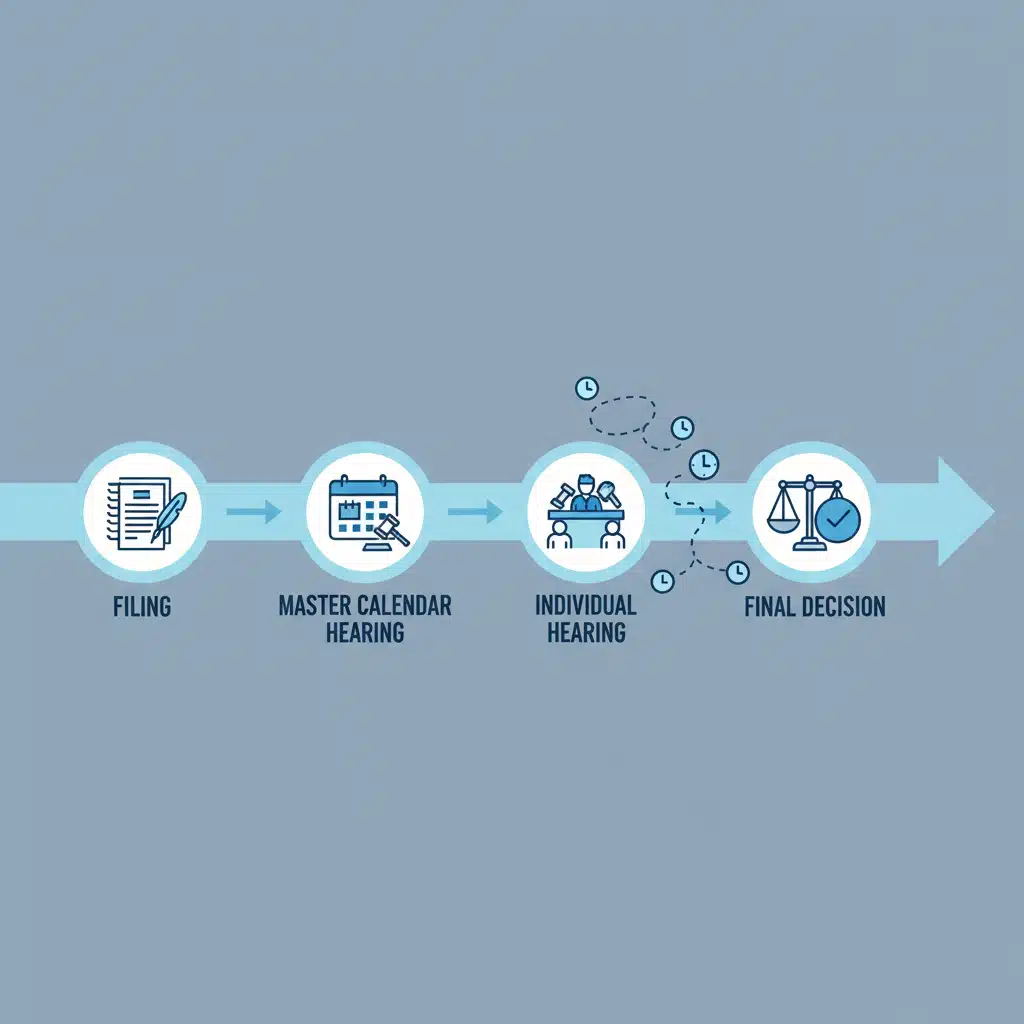
The path through immigration court involves several key stages. While every case is unique, the general process follows a predictable sequence.
Step 1: The Notice to Appear (NTA) and Master Calendar Hearing
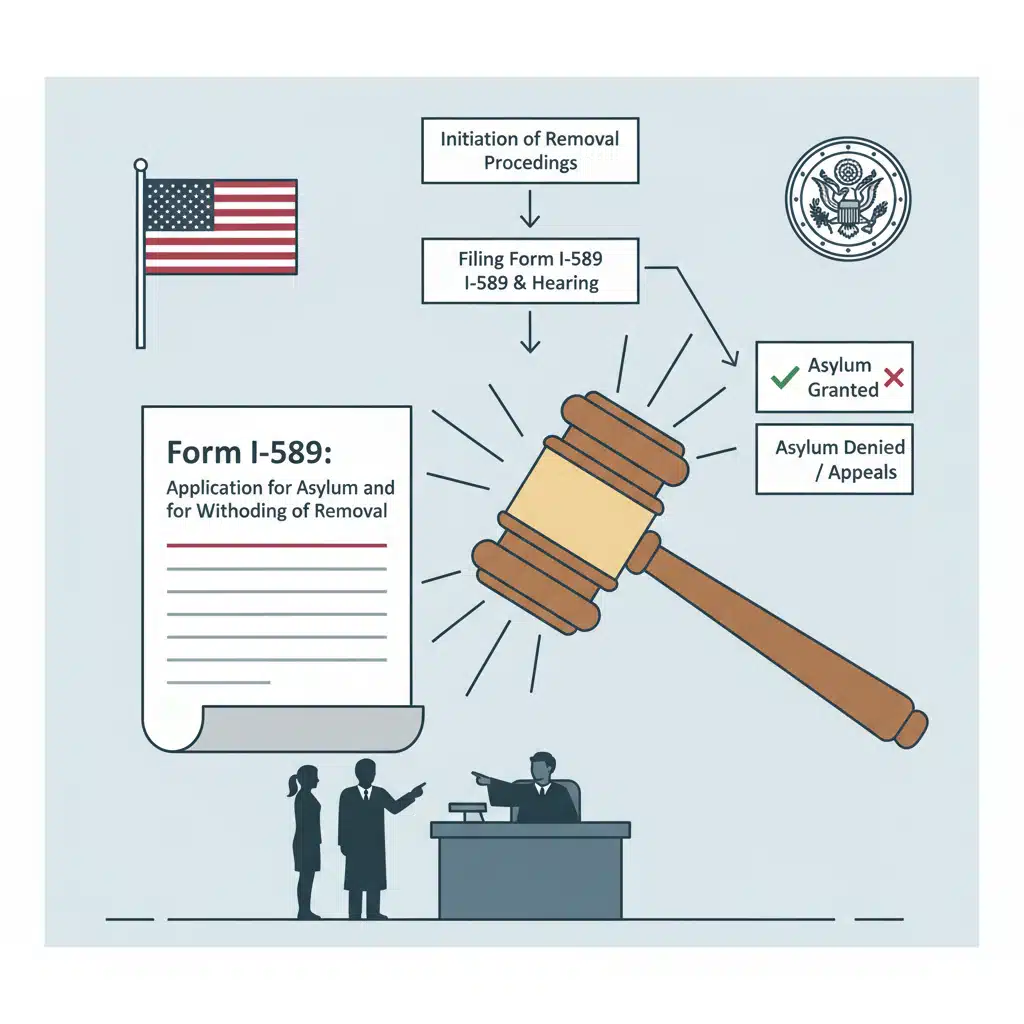
The defensive asylum process officially begins when you receive a Notice to Appear (NTA). This legal document orders you to appear before an immigration judge and explains why the U.S. government believes you are removable.
Your first court appearance is the Master Calendar Hearing (MCH). This is a brief, preliminary hearing where you appear before the judge along with many other individuals. During your MCH, the judge will:
- Confirm your name and contact information.
- Explain your rights.
- Ask you to admit or deny the charges listed on the NTA.
- Ask what form of relief or protection you are seeking from removal.
This is the point where you or your attorney will state your intention to apply for asylum. The judge will then set a deadline for you to file your official asylum application and schedule your next hearing.
Step 2: Filing Form I-589, Application for Asylum
The core of your case is Form I-589, Application for Asylum and for Withholding of Removal. This comprehensive document is your formal request for protection. You must submit it to the court by the deadline set by the judge. Failing to do so can result in the judge ordering your removal.
Completing this form requires careful attention to detail. You will need to provide information about your personal history, family, and the specific reasons you fear returning to your home country. Your written testimony must be thorough, consistent, and truthful. This is often where an experienced asylum lawyer provides the most value, ensuring the application is compelling and error-free.
Important Note: You must file your asylum application within one year of your last arrival in the United States. There are limited exceptions to this rule, but it is a critical deadline to meet.
Step 3: Biometrics Appointment and the “Asylum Clock”
After filing your Form I-589, you will receive a notice for a biometrics appointment. At this appointment, USCIS will take your fingerprints and photograph for background and security checks.
Once your application is officially filed, your “Asylum EAD Clock” begins. This is the 180-day countdown that determines when you can apply for a work permit (Employment Authorization Document). You can apply for an EAD after your asylum case has been pending for 150 days, and USCIS can approve it once the clock hits 180 days. Any delays you request in court can stop this clock, so it is crucial to be prepared for every deadline.
Step 4: Preparing for the Individual Merits Hearing
This is the most critical stage of the defensive asylum process. The Individual Merits Hearing is your trial, where you present your case directly to the immigration judge. Unlike the brief Master Calendar Hearing, this hearing is just for you and can last several hours.
Preparation is everything. During this phase, you and your attorney will:
- Gather Extensive Evidence: The burden of proof is on you to show that you qualify for asylum. This requires strong, credible evidence to support your claim. This can include:
- Personal Declaration: A detailed written statement telling your story in your own words.
- Country Conditions Reports: Objective reports from sources like the U.S. Department of State, Human Rights Watch, or Amnesty International that describe the conditions in your home country.
- Supporting Documents: Police reports, medical records, threatening letters, or news articles related to your case.
- Witness Testimony: Statements or live testimony from experts or individuals who can corroborate your claim.
- Practice Your Testimony: The judge will question you extensively about your Form I-589 and your fear of returning home. Your testimony must be credible and consistent. An attorney will prepare you for the types of questions the judge and the government’s attorney will ask.
Step 5: The Individual Merits Hearing
On the day of your hearing, you, your attorney, and any witnesses will appear before the immigration judge. A government attorney representing the Department of Homeland Security (DHS) will also be present to argue against your case.
The hearing will proceed like a trial:
- Your Testimony: You will be placed under oath and will testify about why you are seeking asylum.
- Cross-Examination: The DHS attorney will cross-examine you, looking for inconsistencies or weaknesses in your claim.
- Witness Testimony: Your witnesses will testify and may also be cross-examined.
- Closing Arguments: Your lawyer and the DHS attorney will make their final arguments to the judge, summarizing the evidence and explaining why you should (or should not) be granted asylum.
Step 6: The Judge’s Decision
After hearing all the evidence and arguments, the judge will make a decision. This can happen in one of two ways:
- Oral Decision: In many cases, the judge will issue a decision immediately from the bench at the end of the hearing.
- Written Decision: Sometimes, the judge will reserve the decision and issue a written opinion later by mail.
The judge can grant you asylum, which provides you with protection and a path to a green card. If you do not meet the standard for asylum, the judge may consider you for lesser protections like Withholding of Removal or protection under the Convention Against Torture (CAT). If you are not granted any form of protection, the judge will order your removal from the U.S.
The Right to Appeal
If the immigration judge denies your case, you have the right to appeal the decision to the Board of Immigration Appeals (BIA). You must file a Notice of Appeal within 30 days of the judge’s decision. An appeal is not a new trial; instead, it argues that the judge made a legal or factual error in your case.
Tips for a Successful Defensive Asylum Case
- Hire an Experienced Asylum Lawyer: Navigating immigration court alone is extremely difficult. An attorney who specializes in asylum law can help you build a strong case, prepare for your hearing, and avoid critical mistakes.
- Be Completely Honest: Credibility is the cornerstone of any asylum claim. Even small inconsistencies can damage your case. Be truthful with your attorney and the court at all times.
- Meet Every Deadline: The immigration court system is strict. Missing a deadline to file your application or submit evidence can lead to the denial of your case.
- Document Everything: Keep copies of every document you submit to the court and any correspondence you receive. Stay organized.
The defensive asylum process is long and complex, but with thorough preparation and expert guidance, you can present a compelling case for the protection you need.