Navigating the U.S. immigration system can feel like running a marathon with no clear finish line. For those seeking a Green Card from within the United States, the Adjustment of Status (AOS) process is the final and most crucial step. A common source of anxiety for applicants is the uncertainty surrounding processing times. This guide will provide a detailed look at the expected Adjustment of Status processing times in 2026, explore the factors that cause delays, and offer practical tips to help you keep your application on track.
What is Adjustment of Status?
Adjustment of Status is the process used by eligible individuals who are already physically present in the United States to apply for lawful permanent resident status (a Green Card). The primary form for this process is Form I-485, Application to Register Permanent Residence or Adjust Status. Filing this application allows you to change your immigration status from a temporary nonimmigrant (like a student, tourist, or temporary worker) to a permanent resident without having to leave the country.
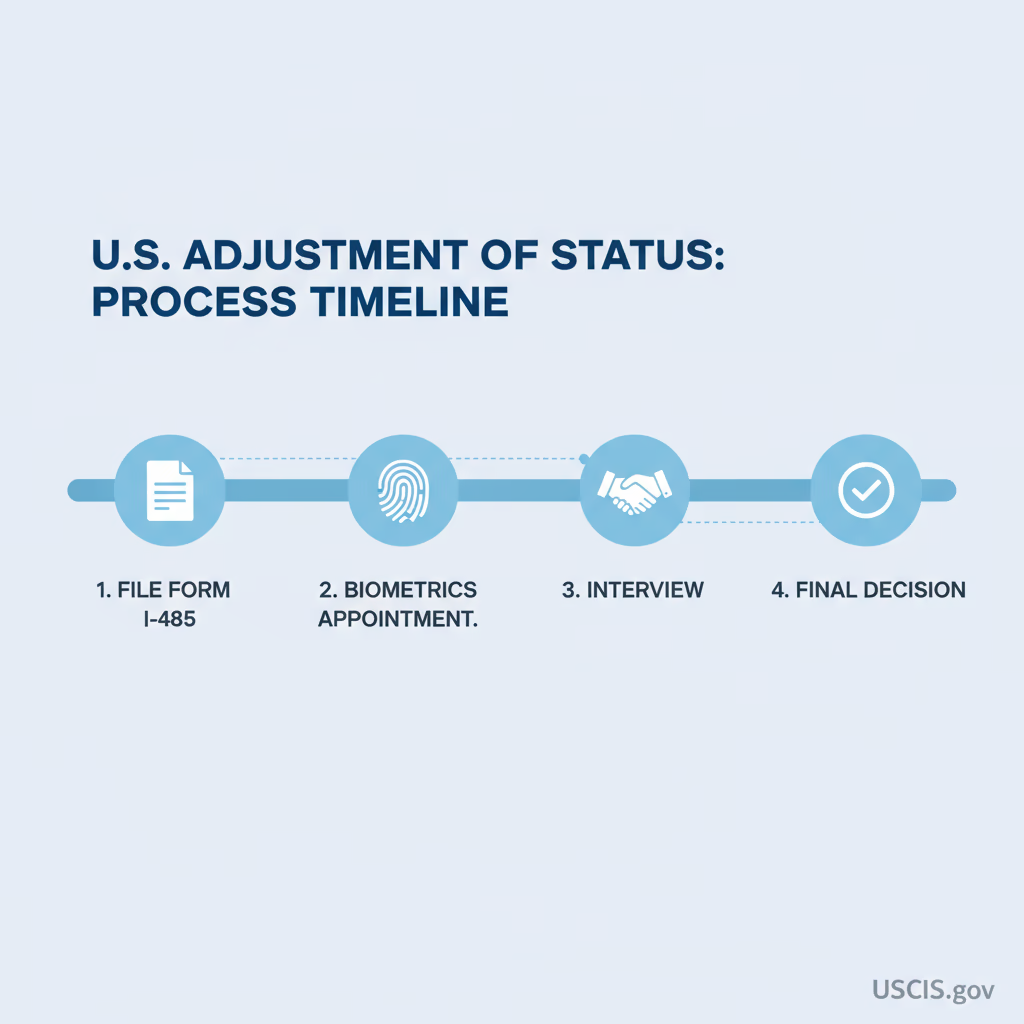
The AOS process typically involves several stages:
- Filing the I-485 Packet: You submit your Form I-485 along with supporting evidence, required fees, and often other related applications, such as Form I-765 (for work authorization) and Form I-131 (for a travel document).
- Biometrics Appointment: U.S. Citizenship and Immigration Services (USCIS) will schedule an appointment for you to provide fingerprints, a photograph, and a signature.
- Potential Request for Evidence (RFE): USCIS may send an RFE if they need more information or documentation to process your case.
- Interview: Many applicants, especially those in marriage-based cases, will be scheduled for an interview with a USCIS officer.
- Final Decision: USCIS issues a final decision, either approving or denying your application.
Factors Affecting I-485 Processing Times in 2026
Processing times for Form I-485 are not uniform. They can vary significantly from several months to a few years. Several key factors influence how long your specific case will take.
USCIS Service Center or Field Office Caseload
Your application is processed at a specific USCIS service center and later, a local field office. The timeline is heavily dependent on the caseload at these locations. Some offices have much larger backlogs than others due to higher application volumes and staffing levels. An applicant in a less busy jurisdiction might see a faster decision than one in a major metropolitan area.
Basis of Your Application
The category under which you are applying for a Green Card plays a major role.
- Family-Based: Spouses, unmarried children under 21, and parents of U.S. citizens often experience faster processing as they are considered “immediate relatives” with no visa quota. Other family preference categories (e.g., siblings of U.S. citizens) have annual limits, which can create long waits.
- Employment-Based: Processing times depend on your specific preference category (EB-1, EB-2, EB-3) and your country of birth. Some categories and countries have significant backlogs, meaning you must wait for a visa number to become available even after your I-485 is filed.
- Asylum or Refugee Status: Individuals who have been granted asylum or admitted as refugees can apply for a Green Card one year after their status was granted. These cases often follow a more streamlined path but are still subject to USCIS backlogs.
Application Accuracy and Completeness
A well-prepared and complete application is your best tool for a smooth process. Missing signatures, incorrect fees, or incomplete documentation will almost certainly lead to delays. USCIS will issue an RFE or even reject the entire application, sending it back to you and pushing your place in the processing queue.
Common Reasons for USCIS Delays
Even with a perfect application, external factors and administrative issues can cause delays. Understanding these can help manage your expectations.
Requests for Evidence (RFE)
An RFE is one of the most common causes of delay. It means the adjudicating officer needs more information before making a decision. Responding to an RFE adds weeks or even months to your timeline. Common reasons for an RFE include missing financial documents (like an Affidavit of Support), outdated medical exams, or insufficient proof of a bona fide relationship in marriage-based cases.
Backlogs and Staffing Issues
USCIS continues to face significant backlogs accumulated over the past several years. These backlogs are a result of policy changes, increased application volumes, and operational constraints. While the agency works to hire more officers and improve efficiency, these systemic issues mean that processing times can remain long and unpredictable throughout 2026.
Security and Background Checks
Every applicant undergoes mandatory security and background checks. While most of these clear quickly, some cases get flagged for further review by various government agencies. If your name or personal information is similar to someone of interest, or if there are complexities in your immigration history, these checks can add significant time to your case.
Tips to Avoid Unnecessary Delays
While you cannot control USCIS backlogs, you can take proactive steps to ensure your case moves as smoothly as possible.
1. File a Complete and Organized Application
Double-check and triple-check your entire application packet before mailing it. Ensure every form is filled out completely, signed in the correct places, and accompanied by the right fee. Include all required initial evidence, clearly labeled and organized. A table of contents can be very helpful for the USCIS officer reviewing your file.
2. Respond to RFEs Promptly and Thoroughly
If you receive an RFE, treat it as your top priority. Read the request carefully to understand exactly what is needed. Gather the required documents and submit a clear, organized response well before the deadline. A weak or incomplete response could lead to a second RFE or a denial.
3. Keep Your Address Updated
The AOS process can be long, and you might move during this time. It is your legal responsibility to update your address with USCIS within 10 days of moving by filing Form AR-11, Alien’s Change of Address Card. Failing to do so can result in you missing crucial notices, such as your biometrics appointment, RFE, or interview notice, which can lead to severe delays or even a denial due to abandonment.
4. Monitor Your Case Status Online
Once you receive your receipt notice, you can use the receipt number to track the status of your case on the USCIS website. This tool provides general updates on where your case is in the process. While it won’t give you a specific timeline, it will notify you when major actions are taken, such as when your biometrics are scheduled or an RFE is mailed.
How to Check Current Processing Times
USCIS provides an online tool for applicants to check estimated processing times for specific forms and office locations. Here’s how to use it:
- Visit the official USCIS Check Case Processing Times page.
- Select the form number (e.g., I-485).
- Select the category for your application (e.g., family-based or employment-based).
- Choose the Field Office or Service Center processing your case. This is usually listed on your receipt notice.
- The tool will display an estimated time range for your case.
Remember that these are just estimates. Some cases will be faster, and some will be slower. For more direct inquiries on a case that is outside normal processing times, you can submit a case inquiry through the USCIS e-Request portal.
The journey to permanent residency requires patience and diligence. By understanding the process, preparing a meticulous application, and staying proactive, you can navigate the 2026 USCIS timelines with greater confidence and minimize the risk of unnecessary delays.