
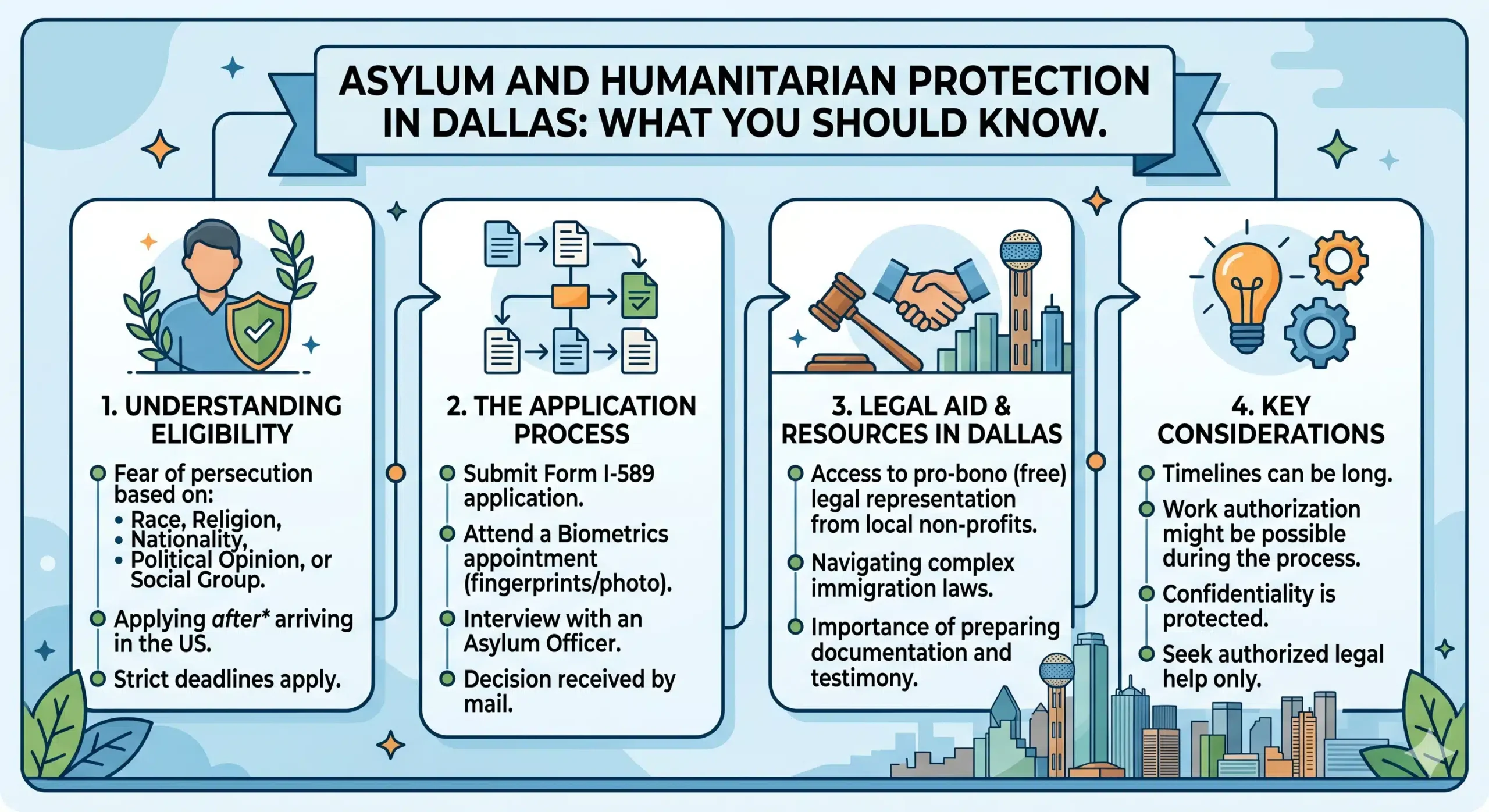
For people who cannot safely return to their home country, U.S. law offers several forms of humanitarian protection — including asylum, Temporary Protected Status, and deferred action. Each has its own rules, deadlines, and benefits. This guide explains the basics so you can understand which path may fit your situation.
If you’re exploring humanitarian options in northwest Dallas, an experienced Dallas Immigration Attorney can review your circumstances and help you act before important deadlines pass.
What is asylum, and who qualifies?
Asylum is protection for people who have suffered persecution, or fear future persecution, in their home country based on race, religion, nationality, political opinion, or membership in a particular social group. People granted asylum can live and work in the U.S. and may later apply for a green card.
There is an important deadline: asylum seekers generally must apply within one year of their last arrival in the United States, with limited exceptions. Because the rules are detailed, it’s worth getting guidance early. The official overview is on the USCIS asylum page at uscis.gov/humanitarian/refugees-and-asylum/asylum. The firm assists with these cases through its asylum services.
What is Temporary Protected Status (TPS)?
Temporary Protected Status is a humanitarian program that gives temporary protection from removal — and often work authorization — to nationals of designated countries experiencing armed conflict, disasters, or other extraordinary conditions. TPS does not by itself lead to a green card, but it can provide vital stability while it is in effect.
Because country designations and registration windows change, timing matters. The official list of designated countries and current deadlines is on the USCIS TPS page at uscis.gov/humanitarian/temporary-protected-status. The firm helps clients register and re-register through its Temporary Protected Status services.
What is deferred action?
Deferred action is a decision to temporarily postpone removal for certain individuals, which may also allow a person to apply for work authorization. It is discretionary and does not grant lawful status, but it can offer a measure of protection. Learn more about the firm’s deferred action services, and review all immigration practice areas for related options.
Can I apply for more than one form of protection?
Sometimes. Depending on the facts, a person may be eligible for more than one humanitarian option, and pursuing the right combination can strengthen overall protection. This is exactly the kind of strategy an attorney maps out after reviewing your full history — because choosing the wrong path, or missing a deadline, can have serious consequences.
Why work with a local Dallas firm?
Humanitarian cases are sensitive and deadline-driven, so an accessible attorney who listens carefully matters. The Piri Law Firm emphasizes personalized attention so you’re never just a case number, a commitment to your family’s safety and stability, and clear communication so you always know where your case stands. The Harry Hines office serves clients throughout northwest Dallas, including the Bachman Lake and Love Field areas.
How do I get started?
The first step is a consultation, where you can share your situation confidentially and learn which protections may apply. To schedule with The Piri Law Firm, call (214) 509-7953 or visit 10807 Harry Hines Blvd, Dallas, TX 75220.
Frequently Asked Questions
Is there a deadline to apply for asylum? Generally, yes — asylum seekers must usually apply within one year of their last arrival in the United States, with limited exceptions. An attorney can advise whether an exception applies to you.
Does TPS lead to a green card? Not by itself. TPS provides temporary protection and often work authorization, but it is not a direct path to permanent residence. Other options may exist depending on your situation.
Can I work while my asylum case is pending? Asylum applicants may become eligible to apply for a work permit after a required waiting period. An attorney can explain the current timing for your case.
Does the firm serve Spanish-speaking clients? Yes. The firm exclusively serves the Latin community and provides guidance in a culturally familiar, accessible way.
How much does a humanitarian case cost? It depends on the type of protection and the complexity of your case. Some applications have no government filing fee. A consultation is the best way to understand the total.
This article is general information, not legal advice. If you are in danger or in crisis, contact local emergency services. The Piri Law Firm | Attorney Michael Piri (Texas Bar No. 24096771) | 10807 Harry Hines Blvd, Dallas, TX 75220 | (214) 509-7953