
For thousands of individuals living in the United States, Temporary Protected Status (TPS) provides essential relief. It offers protection from deportation and the ability to work lawfully. However, the operative word is “Temporary.” TPS is not a permanent solution, and it does not automatically grant a path to U.S. citizenship.
Many TPS holders find themselves in a state of limbo—safe for now, but uncertain about the future. A common question arises: Can I move from TPS to a Green Card?
The short answer is: No, TPS itself does not directly turn into a Green Card. However, having TPS does not prevent you from applying for permanent residency if you qualify through other means. In some specific situations, having TPS can even help facilitate that process.
This guide explains the complex relationship between TPS and lawful permanent residency (a Green Card), detailing the adjustment of status process and the potential pathways available.
Understanding the Limitations of TPS
To understand your options, you must first understand the nature of your current status. Temporary Protected Status is a statutory benefit granted to eligible nationals of designated countries that are facing ongoing armed conflict, environmental disasters, or other extraordinary conditions.
TPS provides two main benefits:
- Protection from removal (deportation)
- Authorization to work in the U.S. (EAD)
It is not an immigrant visa. It is not a Green Card. Crucially, the time you spend in the U.S. under TPS generally does not count toward the “continuous presence” required for other forms of relief, like cancellation of removal, nor does it serve as a standalone basis for permanent residency. If the Secretary of Homeland Security terminates the designation for your country, you revert to the immigration status you held before TPS (unless that status has expired) or to no status at all.
What Is Adjustment of Status?
“Adjustment of Status” is the process that allows an eligible applicant to become a lawful permanent resident (Green Card holder) without having to go abroad to apply for an immigrant visa. Instead, you apply while remaining in the United States.
For most people, adjusting status requires two main things:
- An underlying basis for immigration: Someone or something must “sponsor” you (like a family member or employer).
- Lawful admission: Generally, to adjust status, you must have been “inspected and admitted” or “paroled” into the United States lawfully.
This second point—lawful admission—is often the biggest hurdle for TPS holders, especially those who originally entered the U.S. without inspection (EWI).
Pathways to a Green Card for TPS Holders
While TPS isn’t a bridge itself, it allows you to walk across other bridges if you can find them. Here are the most common pathways TPS holders use to pursue a Green Card.
1. Family-Based Sponsorship
This is the most common route. If you have a close relative who is a U.S. citizen or lawful permanent resident, they may be able to file a petition (Form I-130) for you.
- Immediate Relatives: If you are the spouse, unmarried child (under 21), or parent of a U.S. citizen (who is at least 21), you are considered an “immediate relative.” Immediate relatives always have a visa number available to them immediately.
- Other Relatives: Other categories (like siblings of citizens or spouses of Green Card holders) have annual caps and often involve long waiting periods.
2. Employment-Based Sponsorship
If you have an employer willing to sponsor you, you might be eligible for an employment-based Green Card. This typically involves the employer filing a petition (Form I-140) and obtaining a labor certification from the Department of Labor. This process can be lengthy and complex, but it is a viable option for many skilled workers holding TPS.
3. Asylum Status
Some TPS holders also have pending asylum applications or have been granted asylum. If you are granted asylum, you can apply for a Green Card one year after your asylum status is approved. This is completely separate from your TPS. It is possible to hold both TPS and Asylum status simultaneously; usually, if asylum is granted, it supersedes the need for TPS.
The “Inspection and Admission” Hurdle
This is the most critical legal concept for TPS holders to understand. Under U.S. immigration law (Section 245(a) of the INA), you generally cannot adjust your status to permanent residency if you entered the country illegally (without inspection).
Many TPS holders entered the U.S. without a visa before obtaining TPS. Even though they now have legal status (TPS), they still lack that initial lawful admission.
The “Travel” Exception:
In the past, traveling abroad with Advance Parole (now often issued as a travel document under Form I-512T) and returning to the U.S. allowed some TPS holders to satisfy the “inspection and admission” requirement. Upon return, they were “paroled” into the U.S., curing the original illegal entry defect. This has been a shifting area of law and policy interpretation, so it is vital to check current USCIS guidance and court rulings regarding the effect of authorized travel on adjustment eligibility.
Recently, USCIS rescinded the Matter of Z-R-Z-C decision, meaning that TPS holders who travel with USCIS authorization (Form I-512T) and are inspected/admitted upon return may satisfy the “inspected and admitted or paroled” requirement for adjustment of status purposes. This can be a game-changer for those married to U.S. citizens.
Challenges and Legal Considerations
The path from TPS to a Green Card is rarely a straight line. Several pitfalls can derail the process.
Unauthorized Travel
Leaving the United States without prior authorization from USCIS can result in losing your TPS and being barred from re-entering the country. If you plan to travel to fix an entry issue or visit family, you must obtain a travel document first.
Criminal Records
Just as criminal convictions can disqualify you from TPS, they can also bar you from getting a Green Card. Certain crimes make an individual “inadmissible.” While some waivers exist, they are difficult to obtain.
Jurisdiction Issues
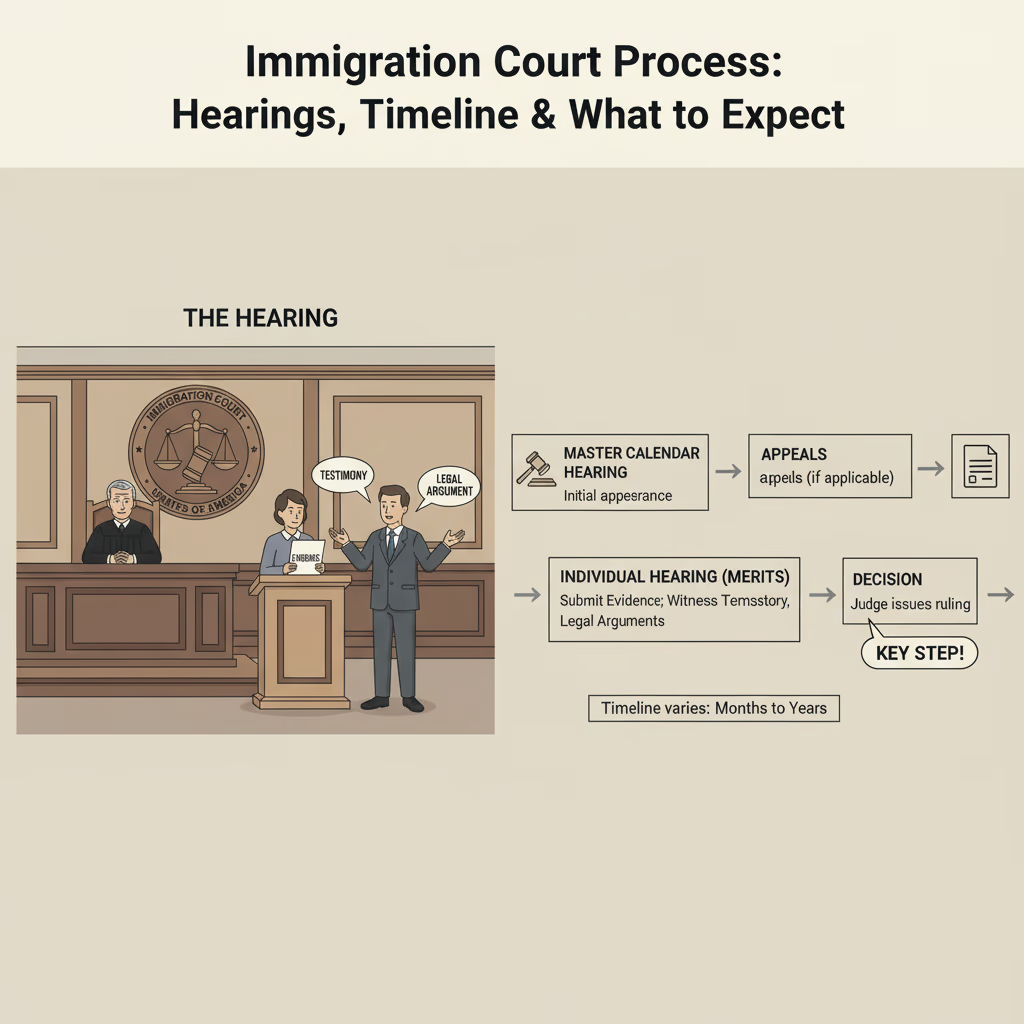
If you have ever been in removal (deportation) proceedings, even if they were administratively closed because you got TPS, jurisdiction over your Green Card application might lie with the Immigration Court, not USCIS. You might need to have the proceedings terminated before you can apply for adjustment of status with USCIS.
Why You Need an Immigration Attorney
Immigration law is high stakes. A mistake on a form or a misunderstanding of “lawful admission” can lead not just to a denial, but to deportation proceedings.
Because the rules governing TPS and adjustment of status have changed frequently due to court cases and policy memos, what was true five years ago may not be true today. An experienced immigration attorney can:
- Assess your initial method of entry.
- Determine if you are eligible to adjust status inside the U.S. or if you need consular processing (which carries its own risks, like the 3-year or 10-year bar).
- Help you navigate the complex intersection of TPS travel and lawful admission.
Conclusion
While Temporary Protected Status does not automatically upgrade to a Green Card, it does provide a stable platform from which you can explore other permanent options. Whether through marriage, employment, or other humanitarian avenues, opportunities exist for those who are eligible.
Don’t assume you are stuck in temporary status forever, but do not attempt to navigate the adjustment of status process alone.
Helpful Federal Resources: