Navigating the immigration system can feel overwhelming, especially when you are facing removal proceedings. A major source of stress is often financial uncertainty. If you are in immigration court, you might be wondering if you can legally work in the United States to support yourself and your family. The short answer is yes, it is often possible, but it depends on your specific situation.
Obtaining a work permit, officially known as an Employment Authorization Document (EAD), is a critical step toward financial stability during this time. This guide will explain the rules for getting a work permit while your case is pending in immigration court, who is eligible, and how to navigate the application process.
What is an Employment Authorization Document (EAD)?
An Employment Authorization Document (EAD) is a card issued by U.S. Citizenship and Immigration Services (USCIS) that proves you are allowed to work legally in the United States for a specific period. It is often referred to simply as a “work permit.” With an EAD, you can obtain a Social Security number, which allows you to be hired by any U.S. employer, pay taxes, and build a work history.
Having an EAD is crucial. Working without authorization can have severe consequences for your immigration case, potentially making it much harder to obtain legal status in the future.
Work Permit Eligibility During Removal Proceedings
Being in removal proceedings does not automatically disqualify you from obtaining a work permit. However, it also doesn’t automatically grant you one. Your eligibility depends on the type of immigration relief you are seeking in court. The most common path to an EAD for individuals in immigration court is through a pending application for asylum.
Pending Asylum Application (Form I-589)
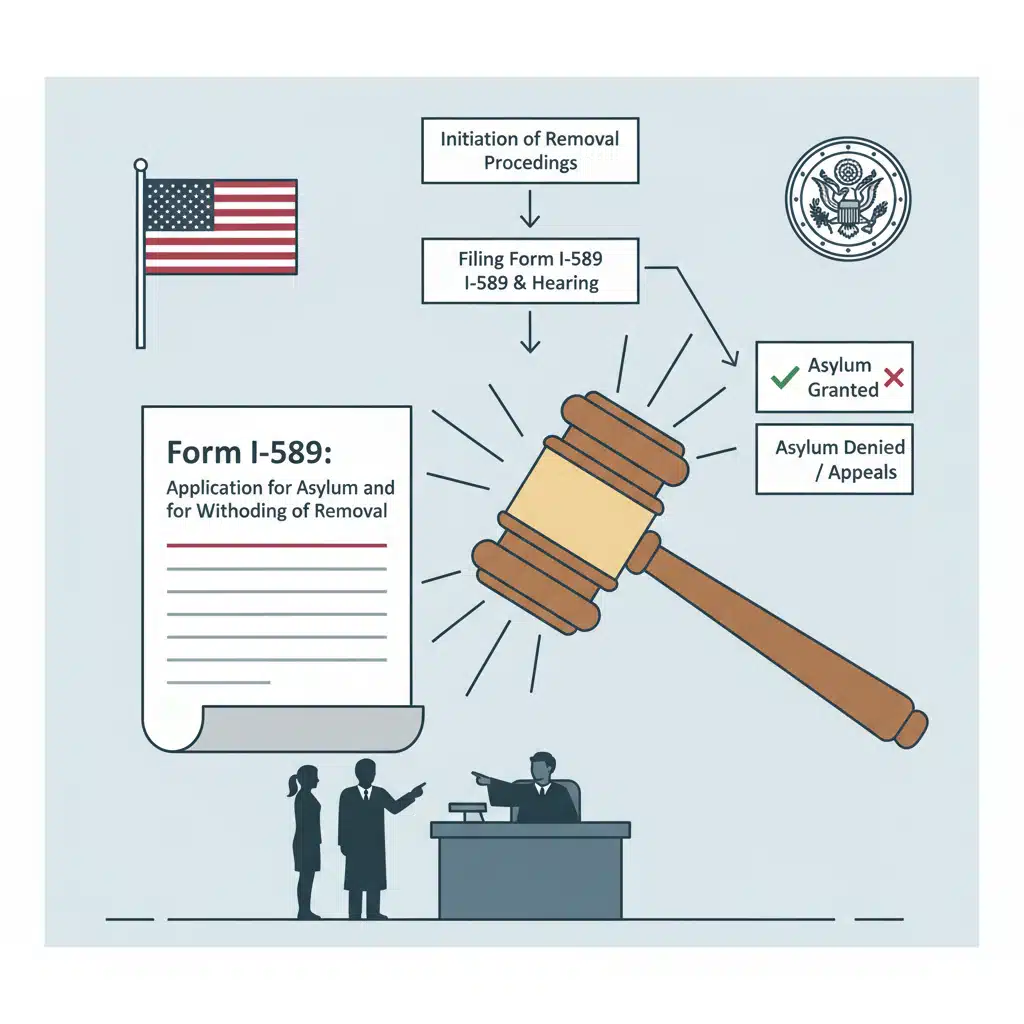
The most frequent way people in immigration court get a work permit is by filing for asylum. Asylum is a form of protection granted to individuals who have fled their home country due to persecution or a well-founded fear of persecution.
When you are in defensive asylum proceedings (meaning you apply for asylum as a defense against removal), you can apply for an EAD based on your pending asylum application. However, there are specific timing rules you must follow:
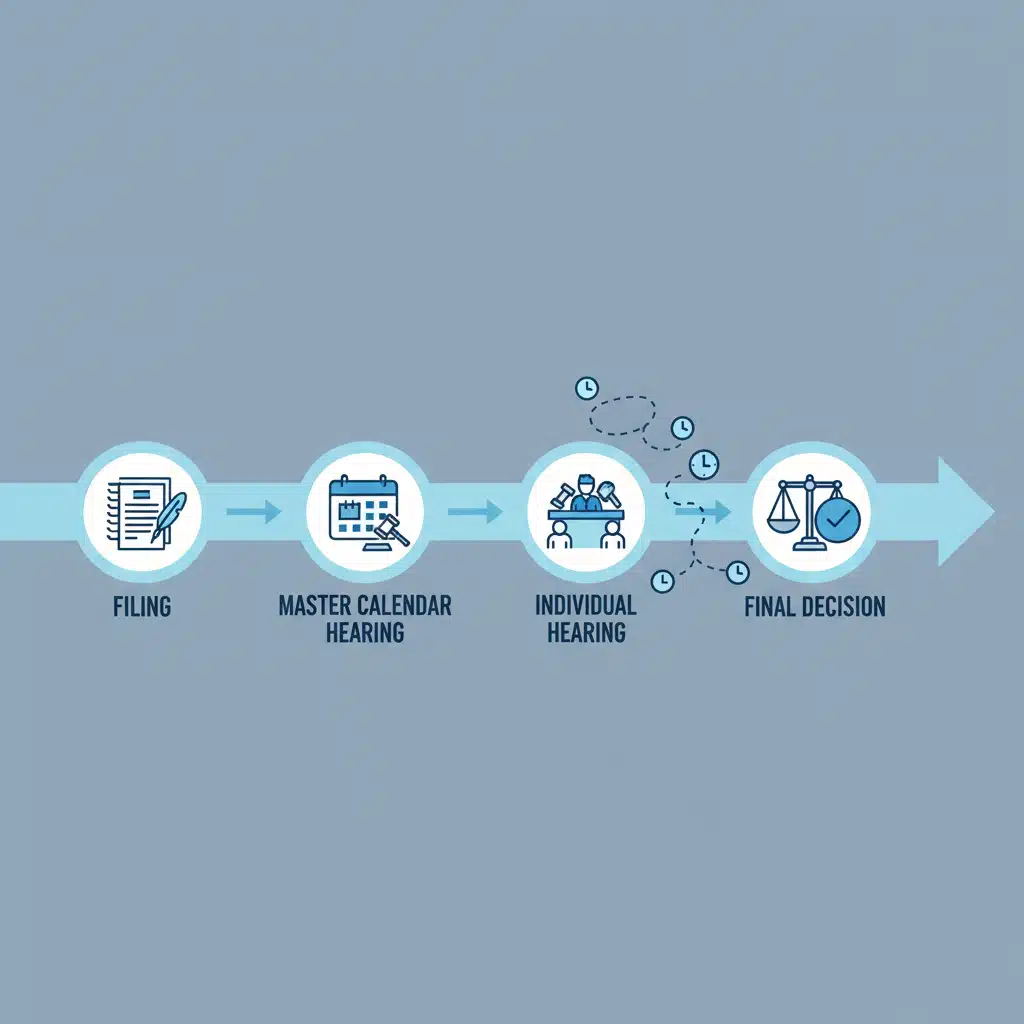
- The 180-Day Asylum Clock: You cannot apply for a work permit immediately after filing your asylum application (Form I-589). You must wait until your case has been pending for at least 150 days. USCIS cannot approve your EAD application until your asylum application has been pending for a total of 180 days. This waiting period is often called the “Asylum EAD Clock.”
- What Stops the Clock? The clock only runs when your case is actively pending. Any delays caused by you or your attorney can “stop the clock.” For example, if you request to reschedule a hearing, fail to appear at a required appointment, or ask for more time to gather evidence, the judge may stop the clock. This means the time your case is delayed will not count toward the 180-day requirement. It is vital to avoid causing any delays to ensure you become eligible for a work permit as soon as possible.
Once you have met the 150-day waiting period and the clock has not been stopped due to your actions, you can file Form I-765, Application for Employment Authorization. If your asylum application is the basis for your eligibility, you will use category (c)(8).
Other Paths to a Work Permit in Immigration Court
While a pending asylum application is the most common route, other forms of relief pursued in immigration court may also lead to work permit eligibility.
Cancellation of Removal
Cancellation of Removal is a defense against deportation that allows certain long-term residents to apply for a green card. There are two main types:
- Cancellation for Certain Permanent Residents: If you are a lawful permanent resident (green card holder) in removal proceedings, you do not need a separate work permit. Your green card already authorizes you to work.
- Cancellation for Certain Nonpermanent Residents: To qualify, you generally must prove you have been in the U.S. for at least 10 years, have been a person of good moral character, and that your removal would cause “exceptional and extremely unusual hardship” to a qualifying U.S. citizen or permanent resident relative. If an immigration judge finds that you have established a basic case for eligibility (a “prima facie” case), you may be able to apply for an EAD while your case is pending.
Withholding of Removal or Convention Against Torture (CAT) Protection
If an immigration judge grants you Withholding of Removal or protection under the Convention Against Torture (CAT), you are eligible for a work permit. Unlike asylum, which leads to a path to a green card, these forms of relief only protect you from being deported to a specific country where you would face harm. However, they do provide the right to work.
Once a judge grants you one of these protections, you can file Form I-765 to receive your EAD.
Adjustment of Status
In some limited circumstances, you may be able to apply for Adjustment of Status to become a lawful permanent resident (get a green card) while in immigration court. This is usually possible if you have an approved immigrant petition filed by a family member or employer and you meet all other eligibility criteria. If you have a pending Adjustment of Status application (Form I-485) with USCIS, you are eligible to apply for a work permit based on that application.
How to Apply for Your EAD (Form I-765)
Once you confirm your eligibility, the next step is to file Form I-765, Application for Employment Authorization, with USCIS.
Key Steps in the Application Process:
- Complete Form I-765: Download the latest version of the form from the USCIS website. Fill it out completely and accurately. Pay close attention to the eligibility category you select, as this tells USCIS why you qualify. For a pending asylum case, the category is (c)(8).
- Gather Supporting Documents: The required documents will depend on your eligibility category. For a (c)(8) application based on asylum, you will typically need:
- A copy of your government-issued photo ID.
- Two passport-style photos.
- A copy of the document showing your asylum application was received.
- File the Application: You can often file Form I-765 online, which is the recommended method for faster processing. If you file by mail, ensure you send it to the correct USCIS lockbox address based on your location and eligibility category. There is currently no filing fee for initial EAD applications based on a pending asylum claim.
After you file, USCIS will send you a receipt notice. You can use the receipt number to track the status of your case online. Processing times can vary, so it is best to apply as soon as you become eligible.
Navigating the Process Successfully
The rules surrounding work permits and immigration court can be complex. Here are a few practical tips to help you navigate the process:
- Avoid Delays: As mentioned, any delays you cause in your immigration court case can stop your Asylum EAD Clock. Be prepared for all hearings and deadlines.
- Keep Your Address Updated: You must inform both the immigration court (EOIR) and USCIS of any change of address. Failing to do so can result in missed notices and negative outcomes for your case.
- Consult an Immigration Attorney: An experienced immigration attorney can provide invaluable guidance. They can help you determine your eligibility for relief, ensure your asylum clock is running correctly, and properly file your work permit application. Legal counsel can significantly increase your chances of success.
Being in immigration court is a challenging experience, but understanding your right to work can provide a sense of control and stability. By knowing the rules and following the correct procedures, you can take an important step toward supporting yourself while you await a decision on your case.