When the person who wants a green card lives outside the United States, the path to permanent residence usually runs through a U.S. embassy or consulate in their home country. This route is called consular processing. This guide explains how it works and how a Dallas attorney can help even when your relative is abroad.
If your family member is overseas and you’re starting the process from Dallas, an experienced Dallas Immigration Attorney can coordinate the case from petition to interview.
What is consular processing?
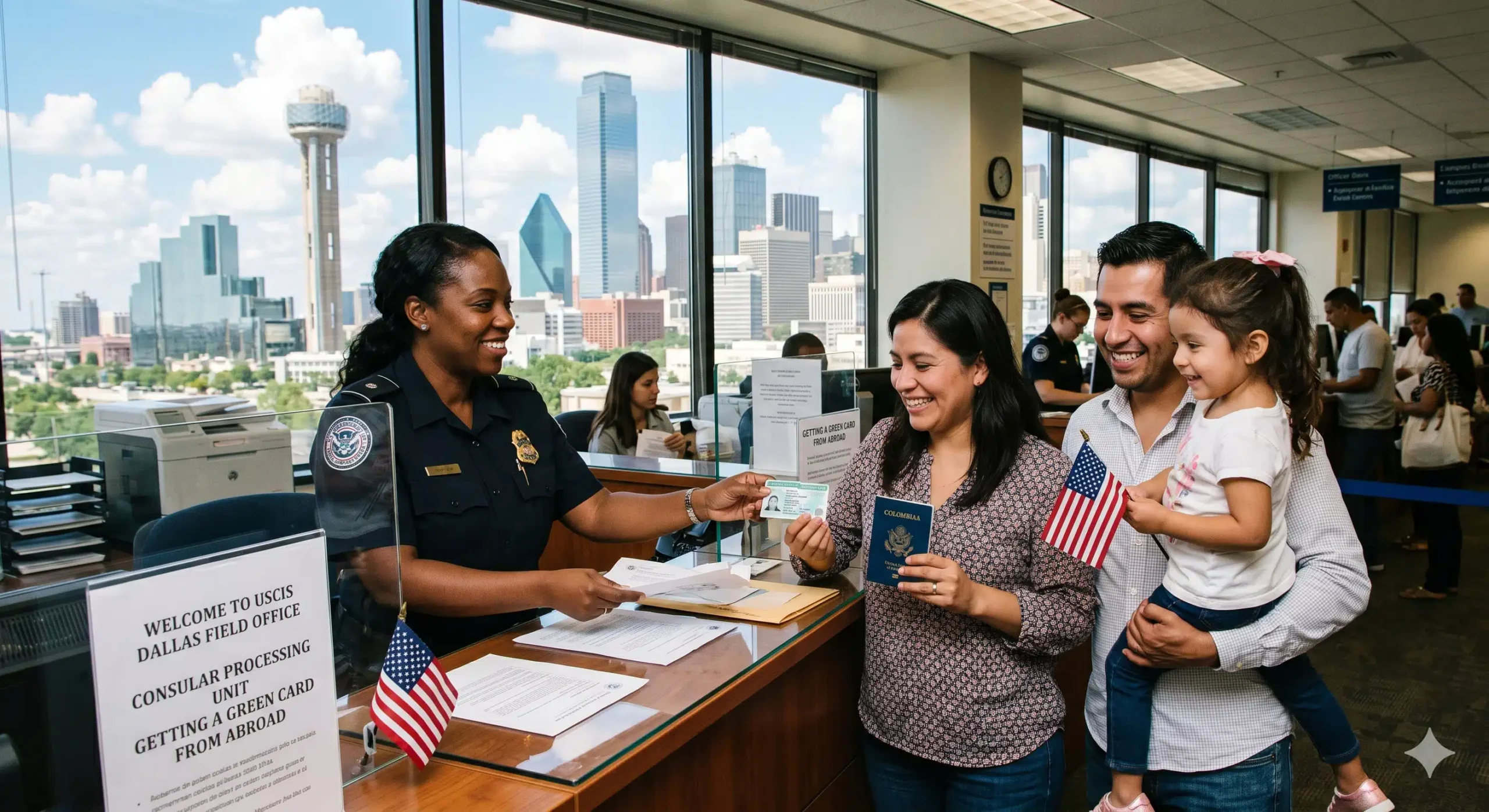
Consular processing is how a person outside the United States obtains an immigrant visa to enter as a lawful permanent resident. It’s the counterpart to adjustment of status, which is used by people already inside the U.S. With consular processing, the final step — the immigrant visa interview — happens at a U.S. embassy or consulate abroad.
The Piri Law Firm, located downtown at 2001 Ross Ave, Suite 700, in Dallas, TX 75201, helps families pursue green cards through both consular processing and its family-based visa services.
How does consular processing work?
In a typical family case, the process involves a petition filed with USCIS, then case processing through the U.S. Department of State’s National Visa Center, followed by the immigrant visa interview at the consulate abroad. After the visa is issued and the person enters the U.S., they become a permanent resident. The Department of State explains the immigrant visa process at travel.state.gov, and the USCIS green card hub is at uscis.gov/green-card.
Consular processing or adjustment of status — which applies to me?
The short answer: it usually depends on where the immigrant is. Someone already in the United States and eligible may pursue adjustment of status here, while someone abroad generally uses consular processing. There are exceptions and strategic considerations, which an attorney can walk through with you.
What happens at the consular interview?
At the interview, a consular officer reviews the application and supporting documents and asks questions to confirm eligibility and, in family cases, the genuineness of the relationship. Preparing in advance — organizing documents and knowing what to expect — helps the interview go smoothly. Engaged couples bringing a partner to the U.S. may instead begin with a K-1 fiancé(e) visa.
What can delay a consular case?
Common causes of delay include incomplete documentation, issues that require a waiver (such as certain grounds of inadmissibility), and processing backlogs. Building a complete, well-organized case from the start is the best way to avoid setbacks. You can review related options among the firm’s immigration practice areas.
Why work with a local Dallas firm?
Even when your relative is abroad, the U.S.-based petitioner often handles much of the case from here — so a local, accessible attorney is valuable. The Piri Law Firm emphasizes personalized attention so you’re never just a case number, a commitment to reuniting families, and clear communication so you always know where your case stands. The downtown Ross Avenue office is centrally located and convenient to the surrounding area.
How do I get started?
The first step is a consultation. To schedule with The Piri Law Firm, call (214) 509-7924 or visit 2001 Ross Ave, Suite 700, Dallas, TX 75201.
Frequently Asked Questions
What is the difference between consular processing and adjustment of status? Consular processing is for people outside the U.S. and finishes at an embassy or consulate abroad; adjustment of status is for eligible people already inside the U.S.
Do I have to travel abroad for the interview? The immigrant visa interview takes place at a U.S. embassy or consulate, typically in the immigrant’s home country. The U.S. petitioner often handles earlier steps from the United States.
How long does consular processing take? It varies with the visa category, the immigrant’s country, and processing backlogs. A complete, well-prepared case helps avoid added delays.
Does the firm serve Spanish-speaking clients? Yes. The firm exclusively serves the Latin community and provides guidance in a culturally familiar, accessible way.
How much does consular processing cost? Government fees apply, plus attorney fees based on the complexity of your case. A consultation is the best way to understand the total.
This article is general information, not legal advice. The Piri Law Firm | Attorney Michael Piri (Texas Bar No. 24096771) | 2001 Ross Ave, Suite 700, Dallas, TX 75201 | (214) 509-7924