
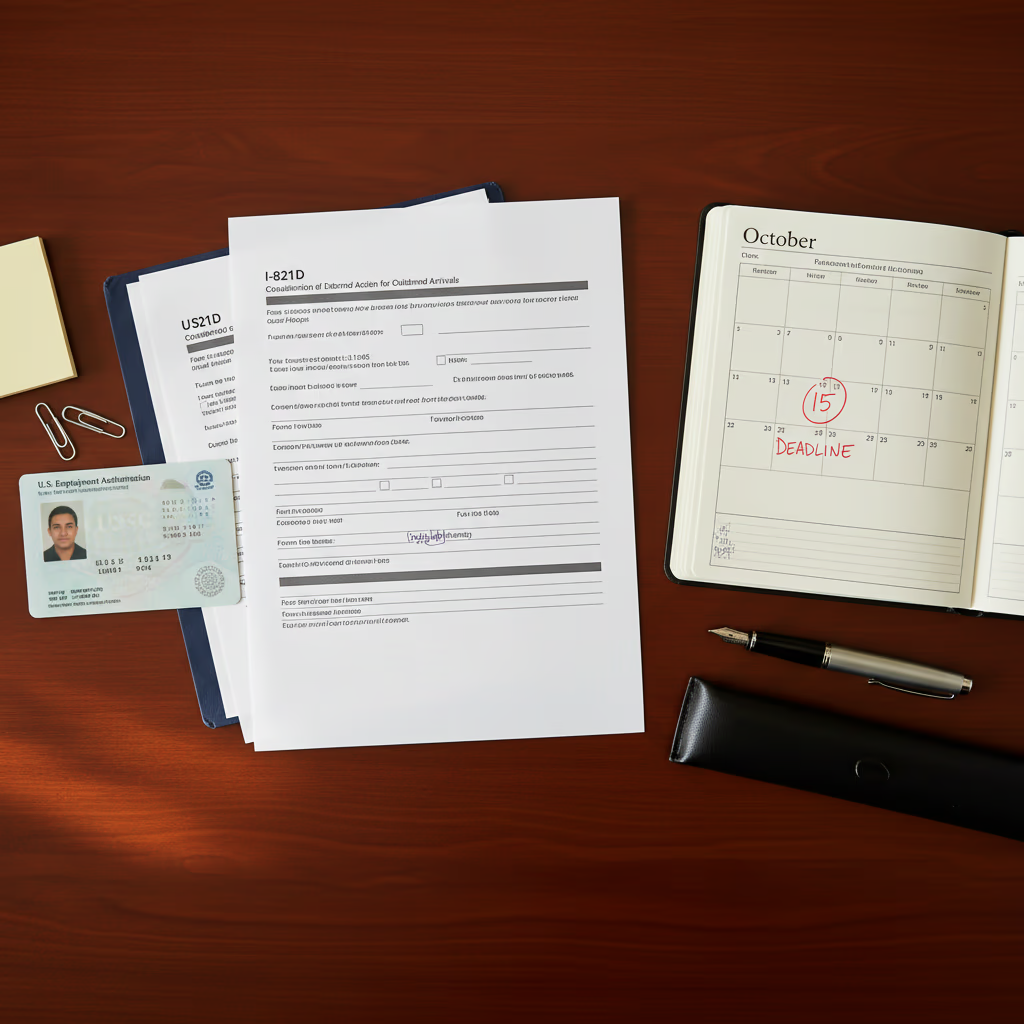
For hundreds of thousands of Dreamers, the Deferred Action for Childhood Arrivals (DACA) program continues to offer a pathway to security and opportunity. With ongoing legal challenges and shifting federal policies, it is more important than ever in 2026 to understand the DACA renewal requirements and ensure your protection doesn’t lapse due to avoidable mistakes.
Whether you are a seasoned applicant or renewing for the first time, the details matter. Changes in deadlines, required documentation, and even processing times can affect your eligibility. Don’t leave your future to chance—knowing the right steps and keeping up with new updates is crucial to maintaining your work authorization and your peace of mind.
This guide offers a detailed update on how to renew DACA in 2026, highlighting current deadlines, variations in processing times, common mistakes, and the importance of consulting a qualified DACA lawyer if your situation is complicated.
Overview of DACA Renewal in 2026
As of 2026, the DACA program still accepts renewals for existing recipients, though initial applications for new applicants remain suspended pending ongoing court cases. Check the USCIS DACA page regularly for legal and policy updates.
To be eligible for DACA renewal in 2026, you must:
- Not have departed the U.S. on or after August 15, 2012, without Advance Parole.
- Have continuously resided in the U.S. since your last approved DACA request.
- Not have been convicted of a felony, significant misdemeanor, or three or more other misdemeanors.
- Not be a threat to national security or public safety.
If you meet the criteria, it is vital to act before your current Employment Authorization Document (EAD) expires.
Key Deadlines and Processing Times for 2026
Timing is critical for DACA renewal—missing the recommended window could mean a risky gap in your status or work authorization.
The 120-150 Day Window
USCIS continues to recommend that you submit your renewal request between 150 and 120 days before your current DACA expiration date.
- If you apply over 150 days in advance: Your case may be held until closer to expiration, causing uncertainty or delay.
- If you apply with less than 120 days left: You risk your DACA and work permit expiring before your renewal is processed—a major issue for employment and legal status.
Processing Times in 2026
DACA renewal processing times in 2026 are generally 2–5 months, but can vary by service center and workload. Some cases can be completed in as little as six weeks, while others may take up to six months during periods of high volume or administrative delays.
Important: If your renewal is pending and your DACA expires, you will lose your work authorization and begin accruing unlawful presence. Always apply early within the recommended timeframe.
You can check average processing times for your service center at the USCIS Processing Times tool.
The Renewal Process: What to Submit in 2026
To renew DACA in 2026, file the following forms with the correct fees:
- Form I-821D: Consideration of Deferred Action for Childhood Arrivals
- Form I-765: Application for Employment Authorization
- Form I-765WS: Worksheet to establish your economic need
DACA renewals can be submitted online or by mail, but online submission is strongly encouraged for 2026. Online filing helps prevent common errors like missing signatures and streamlines the receipt and status-tracking process.
Common Mistakes to Avoid in 2026
Mistakes on your DACA renewal application can result in costly delays or even denials. Be sure to watch out for these common errors:
1. Not Updating Your Address with USCIS
If you’ve moved since your last renewal, file an address update using Form AR-11 or update online. Failure to do so could mean missing critical notices or your new card.
2. Overlooking Legal or Criminal Issues
Any arrest or police contact since your last renewal—even for minor offenses or traffic stops—should be reviewed by an immigration attorney before filing. Don’t leave out information or try to hide past issues.
3. Missing Required Signatures
Applications submitted by mail must have all required signatures or they will be rejected. The online system reduces—but doesn’t eliminate—the risk of missing signatures. Always double-check before submitting.
4. Sending Incorrect Fees
Filing fees sometimes change at the start of the year. For 2026, confirm the current amount using the USCIS Filing Fees page. Incorrect fees will cause USCIS to reject and return your application packet.
When to Consult a DACA Lawyer
Most people renew DACA without legal help, but certain situations require expert guidance. Contact a qualified DACA lawyer if:
- Your DACA has expired for more than one year (you will not be able to renew and may have limited options).
- You have been arrested, charged, or convicted since your last approval.
- You traveled outside the U.S. without Advance Parole.
- Your renewal was previously denied or delayed.
A lawyer can help you assess risks, navigate complex situations, and prepare a safe, accurate application.
Securing Your Future in 2026
DACA’s status may be uncertain, but one thing is clear: missing deadlines or making avoidable mistakes risks your right to work and live safely in the U.S. Stay alert for policy changes, act early, and use reliable resources to confirm every detail before you submit your application.
If your DACA expiration date is coming up and you are within 150 days, begin your renewal process now to avoid gaps in your protection.
Federal Resources
- USCIS: DACA Renewal Information – Official page for forms and eligibility.
- USCIS Filing Fees – Check for current DACA fees.
- Renew My DACA – Updated guides and resources for DACA recipients.