
The article “Learn How To Succeed With Your Asylum Case in 2026” provides a comprehensive guide for navigating the increasingly complex asylum process in the United States. Here’s a summary of the key points:
Challenges in 2026
- Restrictive Policies: New policies have made asylum cases more difficult, requiring meticulous preparation and adherence to deadlines.
- Key Restrictions:
- Decision Pause: USCIS has suspended final decisions on pending asylum applications.
- Travel Bans: Entry restrictions for citizens from 39 countries.
- Expanded Expedited Removal: Broader use of deportation without formal hearings.
Strategies for Success
- Strengthen Evidence:
- Provide corroborative proof (e.g., documents, photos, videos).
- Use detailed witness letters.
- Document country conditions with independent reports.
- Translate all foreign documents into certified English.
- Maintain Legal Status:
- File asylum applications within one year of arrival.
- Stay updated on work permit changes and fees.
- Legal Guidance:
- Hire an experienced attorney to improve approval chances.
- Address third-country bars and explore alternative relief options like Withholding of Removal or CAT protection.
The article emphasizes the importance of professional legal help, diligent preparation, and staying informed to build a strong case.
Seeking asylum in the United States has become an increasingly complex process. The legal landscape in 2026 presents significant challenges due to a series of restrictive policies. For those fleeing persecution and seeking safety, understanding these changes is the first step toward building a successful case. This guide offers an overview of the current environment and provides actionable strategies to help you navigate the system. We will cover key policy restrictions, how to strengthen your evidence, ways to maintain legal status, and essential legal tactics.
The Restrictive Legal Landscape
The current administration has introduced policies that make winning an asylum case more difficult than ever. Navigating this environment requires meticulous preparation, strict adherence to deadlines, and a proactive approach. Decision-makers are scrutinizing applications with greater intensity, and procedural hurdles can create significant delays and complications. Success often depends on understanding these obstacles and preparing a robust case from the very beginning.
Key Policy Restrictions to Understand
Several recent policy changes directly impact asylum seekers. Being aware of them is crucial for managing your case effectively.
The Decision Pause
As of November 28, 2025, U.S. Citizenship and Immigration Services (USCIS) has suspended final decisions on pending asylum applications. While interviews may still be conducted, the agency is not issuing approvals or denials. This pause means that thousands of cases could remain in limbo for an unknown period, creating uncertainty for applicants and their families.
New Travel Bans
Effective January 1, 2026, new travel restrictions have been implemented, barring or limiting entry for citizens from 39 countries. Nations on this list include Afghanistan, Venezuela, and several others in Africa. If you are a citizen of an affected country, these bans could impact your eligibility or the priority of your case. It is vital to consult an immigration attorney to understand how these rules apply to your specific situation.
Expanded Expedited Removal
The government has broadened its use of “expedited removal.” This process allows immigration officials to deport certain individuals without a formal court hearing. It now applies to people who have been in the U.S. for less than two years and lack valid entry documents. This policy underscores the importance of filing for asylum quickly and correctly to establish a legal basis for your presence.
Strengthening Your Evidence
With evidentiary standards at an all-time high, a well-documented case is more important than ever. You must provide compelling proof for every aspect of your claim.
Provide Strong Corroborative Proof
General statements are no longer sufficient. You need to support your story with concrete evidence. This can include receipts for political party membership, photos or videos of your participation in protests, medical records detailing injuries, or even relevant social media posts. Every piece of documentation helps build a credible and verifiable narrative.
Use Effective Witness Letters
Letters from witnesses who can confirm your story are powerful. However, they must be crafted carefully. Each letter should include the witness’s full contact information and a signed, sworn statement affirming that the contents are true. Avoid using generic, templated language, as this can raise suspicion with immigration officers. The more personal and detailed the letter, the more weight it will carry.
Document Country Conditions Thoroughly
Do not rely solely on U.S. State Department reports, as their scope has been reduced. Supplement your case with independent human rights reports, articles from reputable news organizations, and testimony from country experts. This information helps prove that the fear of persecution you face is well-founded and reflects the reality on the ground in your home country.
Translate All Foreign Documents
Any document not in English must be submitted with a complete, certified English translation. This rule applies to everything from official records to your own personal affidavit. Failure to provide proper translations can lead to delays or the rejection of your evidence.
Maintaining Legal Status and Work Permits
Staying compliant with deadlines and administrative rules is critical. A single misstep can jeopardize your entire case.
Meet the One-Year Filing Deadline
You must file your asylum application (Form I-589) within one year of your last arrival in the United States. This is a strict deadline, and missing it is a common reason for denial. If you cannot meet this deadline, you must prove that extraordinary circumstances prevented you from filing on time.
Understand Work Permit Changes and Fees
Recent changes affect your ability to work legally. Work permits issued after December 4, 2025, are now valid for only 18 months, a significant reduction from the previous five-year validity. Furthermore, be prepared for new costs. There is a new $550 fee for initial work permits based on an asylum application, a $100 non-waivable fee to file the asylum application itself, and an additional $100 annual fee for as long as your case is pending.
Essential Legal Strategies
The complexity of the current system makes professional legal guidance almost indispensable.
Hire an Experienced Attorney
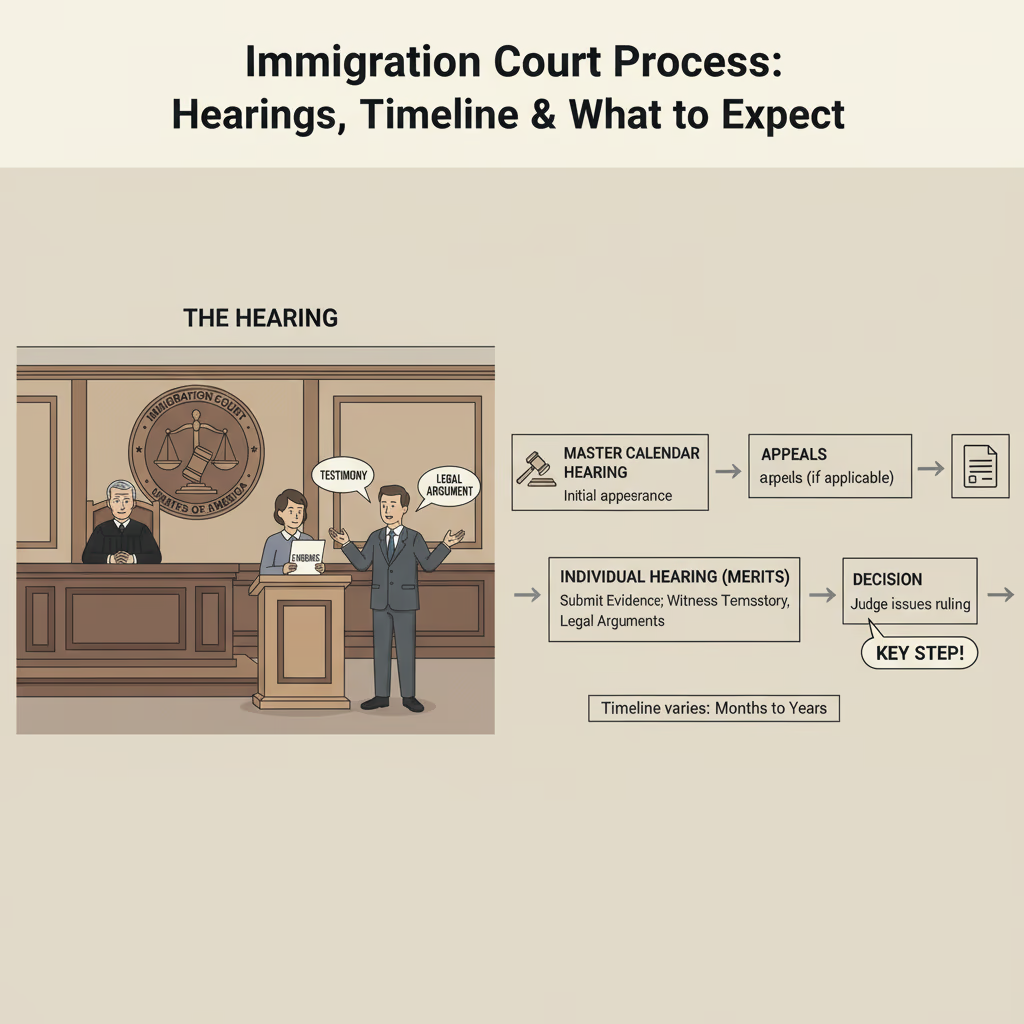
The data is clear: asylum seekers who have legal representation are approximately twice as likely to have their cases approved compared to those who represent themselves. An experienced immigration attorney can help you build a strong case, meet all deadlines, and represent you before USCIS or in immigration court.
Address Third-Country Bars
If you traveled through another country on your way to the U.S., you must be prepared to prove you could not have safely sought asylum there. You will need to explain why you did not have permanent legal status in that third country and why you could not safely relocate within its borders.
Screen for Alternative Forms of Relief
If your asylum application is denied, you may be placed in deportation proceedings. It is important to discuss alternative options with your attorney. Forms of relief like Withholding of Removal or protection under the Convention Against Torture (CAT) may still be available. These have a higher standard of proof—requiring you to show a greater than 50% probability of persecution or torture—but they can provide a crucial safety net if asylum is not granted.
Navigating the asylum process in 2026 is a difficult journey, but with careful preparation and expert guidance, it is possible to build a strong case for protection. Stay informed, gather your evidence diligently, and seek professional legal help to give yourself the best chance of success.