Getting married is a major life milestone. When your spouse is from another country, the next big step is often navigating the U.S. immigration system to secure a marriage-based Green Card. This process allows your spouse to live and work permanently in the United States, but it involves detailed paperwork, strict timelines, and a crucial interview. Understanding the journey from start to finish can make it feel much less intimidating.
This guide explains the marriage-based Green Card process, from filing the first form to receiving the final approval. We’ll cover eligibility, timelines, and tips for a smooth and successful application.
Understanding the Basics: Who Is Eligible?
The marriage-based Green Card process hinges on one core requirement: a legally valid, authentic marriage. You and your spouse must prove that your marriage is “bona fide”—meaning it was entered into for genuine reasons of love and companionship, not just for an immigration benefit.
The process differs slightly depending on the status of the sponsoring spouse:
- U.S. Citizen Sponsor: Can petition for a spouse who is either inside or outside the United States. Spouses of U.S. citizens are considered “immediate relatives,” which means there is no annual limit on visas and no waiting line.
- Green Card Holder (LPR) Sponsor: Can also petition for a spouse. However, these spouses fall into a family preference category (F2A), which has annual visa limits. This can sometimes result in a waiting period before the sponsored spouse can apply for their Green Card.
The Two Main Paths: Consular Processing vs. Adjustment of Status
Your spouse’s physical location at the time of application determines which of two paths your case will follow.
- Adjustment of Status (AOS): This path is for spouses who are already physically inside the United States, typically on a valid nonimmigrant visa (like a student or work visa). The spouse “adjusts” their status from temporary nonimmigrant to permanent resident without leaving the country.
- Consular Processing: This path is for spouses living outside the United States. They complete their Green Card application process through a U.S. Embassy or Consulate in their home country.
The Process Step-by-Step: A Timeline
While every case is unique, the marriage-based Green Card process follows a predictable sequence of events.
Step 1: Filing the Initial Petition (Form I-130)
Timeline: 1-2 weeks (preparation); 10-15 months (USCIS processing)
The journey begins when the U.S. citizen or LPR spouse (the “petitioner”) files Form I-130, Petition for Alien Relative, with U.S. Citizenship and Immigration Services (USCIS). This form establishes the validity of your marriage.
You must submit this form with substantial evidence, including:
- Proof of the petitioner’s U.S. citizenship or LPR status (birth certificate, passport, Green Card).
- Your official marriage certificate.
- Proof that any previous marriages for either spouse have been legally terminated (divorce decrees or death certificates).
- Evidence of a bona fide marriage (e.g., joint bank account statements, shared lease or mortgage, photos together, birth certificates of children you have together).
Once filed, USCIS will issue a receipt notice. You can use the receipt number to track your case status online.
Step 2A: Adjustment of Status (If Spouse Is in the U.S.)
Timeline: Total process often takes 12-24 months from initial filing
For spouses of U.S. citizens who are in the U.S., you can typically file Form I-485, Application to Adjust Status, at the same time as Form I-130. This is called “concurrent filing.” Along with Form I-485, you’ll also file for work and travel authorization (Form I-765 and Form I-131).
- Biometrics Appointment: A few weeks after filing, USCIS will schedule an appointment for your spouse to provide fingerprints, a photo, and a signature.
- Work/Travel Permit: The Employment Authorization Document (EAD) and Advance Parole travel document often arrive within 6-9 months, allowing your spouse to work and travel abroad while the case is pending.
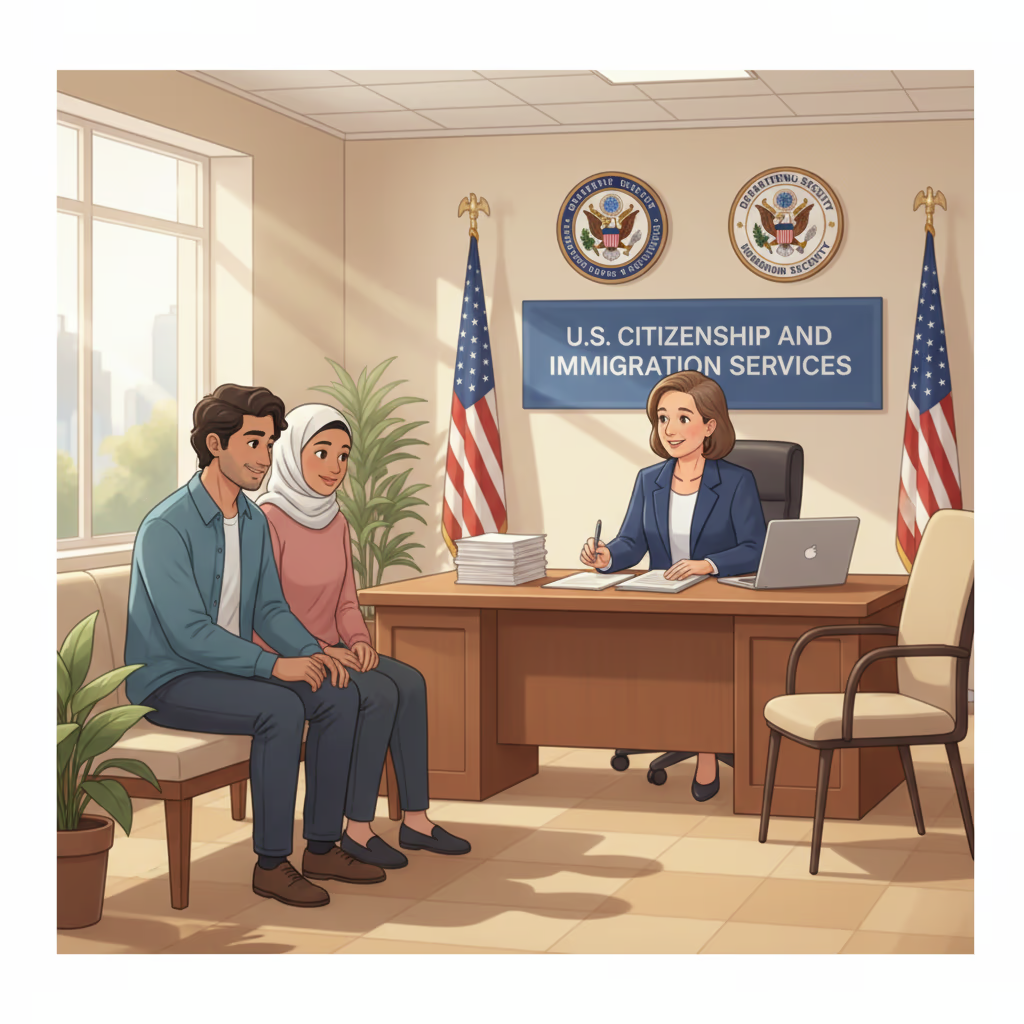
- Interview: USCIS will schedule a joint interview at a local field office.
- Decision: A decision is often made at the conclusion of the interview or shortly after.
Step 2B: Consular Processing (If Spouse Is Abroad)
Timeline: Total process often takes 15-24 months from initial filing
If your spouse is outside the U.S., you must wait for the I-130 to be approved.
- National Visa Center (NVC) Processing: After USCIS approves the I-130, the case is sent to the NVC. You will pay fees and submit financial sponsorship documents (Affidavit of Support) and civil documents online.
- Documentary Qualification: Once the NVC accepts all your documents, your case is “documentarily qualified.”
- Embassy Interview: The NVC schedules an interview at the U.S. Embassy or Consulate in your spouse’s country. Your spouse must attend this interview.
- Visa Issuance: If the interview is successful, the consular officer approves the immigrant visa. Your spouse uses this visa to enter the U.S. and becomes a permanent resident upon arrival.
The Marriage Green Card Interview: Tips for Success
The interview is the government’s chance to verify your relationship in person. The USCIS officer needs to be convinced your marriage is genuine.
- Organize Your Evidence: Bring a binder with originals and copies of all documents you submitted, plus updated evidence of your relationship since you filed. This includes new joint bank statements, photos, mail addressed to both of you, etc.
- Review Your Application: Reread your entire I-130 and I-485 application. Be prepared to answer questions about any information you provided.
- Be Honest: Never lie to an immigration officer. If you don’t know an answer, it’s okay to say so. Inconsistencies or falsehoods are major red flags.
- Practice Common Questions: Be ready to talk about your relationship story. Common questions include:
- “How did you meet?”
- “What do you like about each other?”
- “Describe your wedding day.”
- “What are your spouse’s hobbies?”
Conditional vs. Permanent Green Card
The date your Green Card is approved matters.
- If you have been married for less than two years on the day of approval, your spouse will receive a Conditional Green Card (CR1), valid for two years.
- If you have been married for two years or more, your spouse will receive a Permanent Green Card (IR1), valid for ten years.
For conditional residents, you must jointly file Form I-751, Petition to Remove Conditions on Residence, during the 90-day window before the Green Card expires. This requires submitting new evidence that your marriage is still ongoing and genuine.
Helpful Official Resources
Always rely on official government sources for the most accurate information and forms.
- USCIS – Form I-130, Petition for Alien Relative
- USCIS – Green Card for an Immediate Relative of a U.S. Citizen
- U.S. Department of State – Immigrant Visa for a Spouse
The marriage-based Green Card process requires patience and attention to detail. By preparing a thorough application and approaching the interview with confidence and honesty, you can successfully navigate this final hurdle to starting your life together in the United States.