
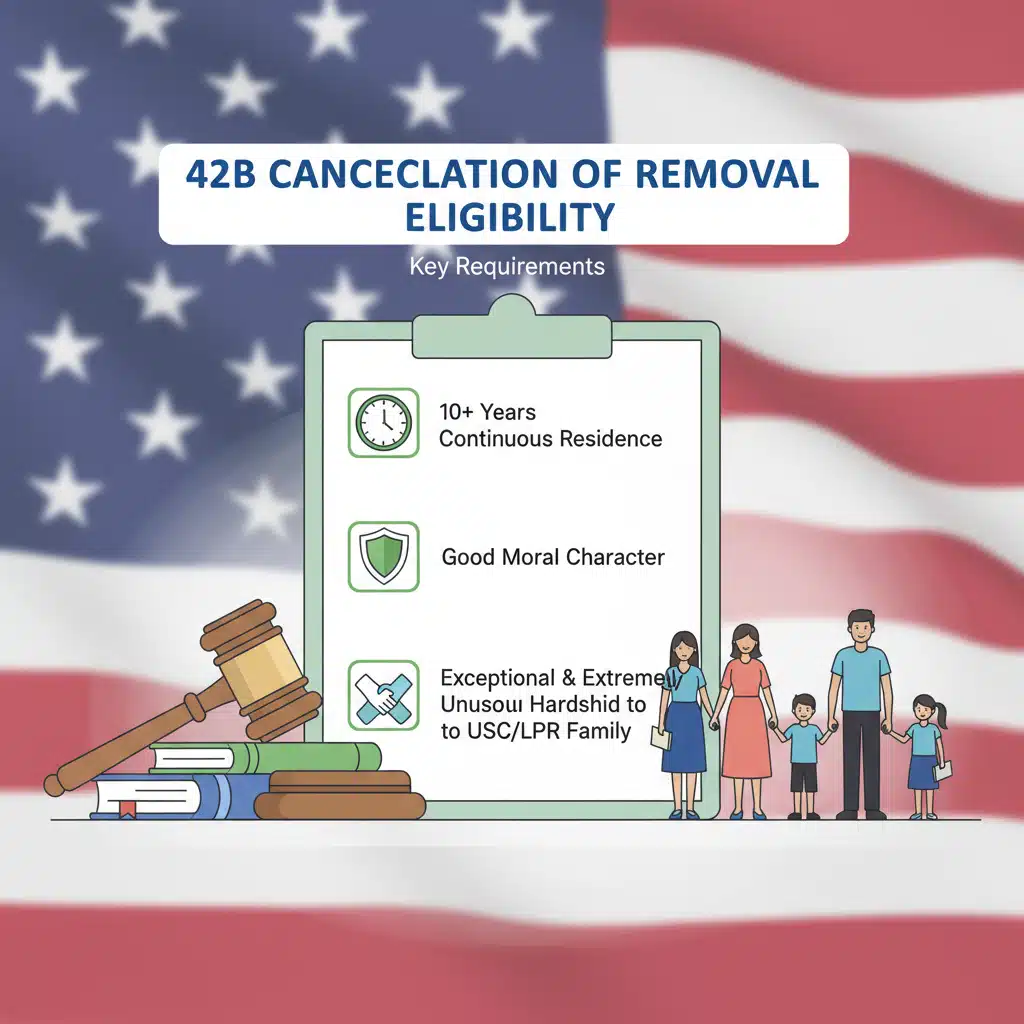
For non-permanent residents facing removal proceedings, the legal landscape can feel incredibly daunting. One of the primary defenses against deportation is 42B Cancellation of Removal. This form of relief is not just a way to stay in the United States; if granted, it cancels the deportation order and provides a direct path to a Green Card (lawful permanent residence).
However, obtaining this relief is difficult. It is a discretionary benefit, meaning an Immigration Judge must weigh the positive and negative factors of your life before making a decision. Judges follow a strict statutory checklist to determine eligibility. Understanding this checklist is the first step toward building a successful case.
This guide provides a detailed breakdown of the eligibility criteria used by immigration judges, explains how they evaluate evidence, and offers practical tips for navigating this high-stakes process.
What Is 42B Cancellation of Removal?
42B Cancellation of Removal is a form of immigration relief available specifically to non-permanent residents who are currently in removal (deportation) proceedings before the Executive Office for Immigration Review (EOIR). It is not an application you can file with USCIS simply because you want a Green Card; you must be in court proceedings to apply.
Because the reward is so significant—permanent residency—the bar for approval is set very high. The law limits the number of these grants to 4,000 per fiscal year, making it a competitive and rigorous process.
The Judge’s Checklist: Four Pillars of Eligibility
To even be considered for Cancellation of Removal, you must prove you meet four specific legal requirements. If you fail to meet even one, the judge is required by law to deny your application.
1. Continuous Physical Presence
The Requirement:
You must have been physically present in the United States for a continuous period of at least 10 years immediately preceding the date you were served with the “Notice to Appear” (NTA). The NTA is the document that officially starts your removal proceedings.
How Judges Evaluate It:
Judges look for gaps in your timeline. A single departure from the U.S. that lasted more than 90 days, or multiple departures that add up to 180 days or more, will break your continuous presence.
Evidence to Strengthen Your Case:
You need to create a paper trail that covers the entire decade. Strong evidence includes:
- Tax Returns: Filing taxes every year is one of the best ways to prove presence.
- Lease Agreements and Utility Bills: These show you had a settled home.
- Employment Records: Pay stubs or letters from employers.
- School and Medical Records: Even records for your children can help prove you were here caring for them.
- Affidavits: Sworn statements from landlords, neighbors, or religious leaders attesting to your presence.
2. Good Moral Character
The Requirement:
You must demonstrate that you have been a person of “good moral character” during the 10-year statutory period.
How Judges Evaluate It:
“Good moral character” is a legal term. Certain acts automatically bar you from meeting this requirement, such as being a habitual drunkard, giving false testimony to gain immigration benefits, or having been convicted of certain crimes. Beyond these automatic bars, judges look at the “totality of the circumstances.” They want to see that you are a law-abiding member of society.
Evidence to Strengthen Your Case:
- Clean Criminal Record: A background check is mandatory.
- Community Involvement: Letters showing you volunteer at church, school, or local organizations.
- Family Support: Proof that you support your children financially and emotionally.
- Letters of Recommendation: Character references from U.S. citizens or permanent residents who know you well.
3. No Disqualifying Convictions
The Requirement:
You cannot have been convicted of an offense under specific sections of the Immigration and Nationality Act (INA). This generally includes aggravated felonies, crimes involving moral turpitude (CIMT), and drug offenses.
How Judges Evaluate It:
This is a strictly legal analysis. The judge will review your FBI rap sheet and court records. Even if a conviction was expunged or happened years ago, it might still count against you for immigration purposes.
Common Challenge:
Sometimes, a minor offense (like a specific type of theft or assault) can be classified as a crime involving moral turpitude. It is critical to have a lawyer analyze your criminal history before you apply.
4. Exceptional and Extremely Unusual Hardship
The Requirement:
You must establish that your removal would result in “exceptional and extremely unusual hardship” to your spouse, parent, or child who is a United States citizen or lawful permanent resident.
How Judges Evaluate It:
This is the most difficult standard to meet. The hardship must be substantially beyond the ordinary suffering that is expected when a family is separated. Mere financial loss or emotional sadness is usually not enough. The judge focuses on the qualifying relative, not on the applicant.
Key Hardship Factors Judges Look For:
- Health Issues: Does your qualifying relative have a serious illness, disability, or psychological condition that requires ongoing treatment in the U.S.? Would that treatment be unavailable or inaccessible in your home country?
- Education: Does your child have special educational needs (IEP, 504 plan) that cannot be met in your home country?
- Country Conditions: Is your home country safe? Would your U.S. citizen relatives face danger, discrimination, or extreme deprivation if they accompanied you?
- Lack of Ties: Do your children speak the language of your home country? Have they ever visited? If they are teenagers who have only known life in the U.S., their adjustment would be harder.
Evaluating the “Discretionary” Factor
Even if you meet all four criteria above, the judge can still deny your case. This is where “discretion” comes in. The judge must decide if you deserve the relief.
They balance positive factors against negative ones.
- Positive Factors: Long residence in the U.S., family ties, business ownership, community service, and rehabilitation if you have a past record.
- Negative Factors: Criminal history (even if not disqualifying), immigration violations, or poor moral character issues.
Common Challenges and How to Overcome Them
Challenge 1: Proving the Hardship Standard
Many applicants underestimate how high the “exceptional and extremely unusual” bar is.
- Solution: Don’t rely on testimony alone. Get expert evidence. If your child has ADHD, get a report from a child psychologist explaining exactly how moving to a new country would harm their development. If your parent has diabetes, get a doctor’s letter detailing the specific medical consequences of losing your care.
Challenge 2: Gaps in Evidence
Missing documents for a specific year can ruin a continuous presence claim.
- Solution: Dig deep. If you don’t have a lease, did you have a library card? A gym membership? Did you send money transfers (remittances)? Sometimes, unconventional records can fill the gaps.
Challenge 3: Inconsistent Testimony
If your verbal testimony in court contradicts what is written in your application, the judge may doubt your credibility.
- Solution: Review your application (Form EOIR-42B) thoroughly with your attorney before your hearing. Ensure every date and detail is accurate and that you remember what you wrote.
Practical Tips for a Strong Application
- Start Early: Gathering 10 years of evidence takes months. Do not wait until the last minute.
- Organize Your Documents: Judges appreciate a well-organized evidence packet. Use a table of contents and clear tabs.
- Focus on the Qualifying Relative: Remember, the hardship argument is about them, not you. Your story is important, but their suffering is the legal key to the case.
- Be Honest: Never lie to an immigration judge. A lie about a small detail can destroy your credibility and result in a denial, even if you were otherwise eligible.
Conclusion
Qualifying for 42B Cancellation of Removal is a complex legal battle, but for many, it is the only way to keep their family together. By understanding the eligibility checklist used by immigration judges—Continuous Presence, Good Moral Character, Clean Record, and Exceptional Hardship—you can assess the strength of your case.
This is not a process to navigate alone. The difference between a grant and a denial often comes down to how well the evidence is presented and how effectively the legal arguments are made. If you believe you may qualify, consult with an experienced immigration attorney who can help you turn this checklist into a roadmap for residency.
Meta Information
Meta Title: Who Qualifies for 42B Cancellation of Removal? (2025 Checklist)
Meta Description: Immigration Judge checklist for 42B Cancellation of Removal: Eligibility rules on continuous presence, hardship, and good moral character explained.