Receiving a decision from the Board of Immigration Appeals denying your appeal can be alarming, particularly if an immigration judge previously ordered you removed from the United States.
But a BIA denial does not always mean that every legal option has ended.
Depending on the case, possible next steps may include asking the BIA to reconsider its decision, filing a motion to reopen based on qualifying new evidence or circumstances, or asking a federal court of appeals to review the BIA’s final decision.
For immigration proceedings completed in Texas, federal judicial review generally takes place in the U.S. Court of Appeals for the Fifth Circuit.
The deadlines can be extremely short.
If the BIA recently dismissed your appeal, contacting a Dallas-Fort Worth BIA appeals attorney promptly can help determine what options remain and whether immediate action is required.
Quick Answer: What Can You Do If the BIA Denies Your Appeal?
Depending on your case, potential options after a BIA denial can include:
- Filing a petition for review in the appropriate federal court of appeals
- Asking the federal court for a stay of removal when appropriate
- Filing a motion to reconsider with the BIA
- Filing a motion to reopen with the BIA
- Pursuing another form of immigration relief when legally available
These remedies have different purposes and deadlines.
One of the most important deadlines is the federal petition-for-review deadline. Under federal immigration law, a petition for review generally must be filed within 30 days of the final order of removal.
Waiting to determine what to do can therefore have serious consequences.
What Does It Mean When the BIA Dismisses an Appeal?
When the BIA dismisses a direct appeal, the Board has generally rejected the appellant’s arguments and allowed the immigration judge’s decision to remain in effect.
For someone who appealed an order of removal, this can mean that the administrative appeal has ended and the removal order has become administratively final.
That changes the legal posture of the case.
During many timely direct BIA appeals on the merits, the removal order is automatically stayed while the Board considers the appeal.
After the BIA dismisses the appeal, that protection generally ends.
Anyone with a removal order should therefore pay close attention to the date the BIA issues its decision.
Option 1: Petition the Fifth Circuit for Review
After a qualifying final BIA decision, a person may be able to seek judicial review in a federal court of appeals.
For immigration proceedings completed within Texas, that generally means the Fifth Circuit Court of Appeals.
The Fifth Circuit hears immigration petitions for review along with other federal appellate matters.
A petition for review is not another BIA appeal.
The case moves from the administrative immigration system into the federal judiciary.
What Is a Petition for Review?
A petition for review asks a federal court of appeals to examine a qualifying final immigration order.
The federal court does not ordinarily conduct a new immigration trial.
Instead, judicial review focuses on issues properly within the court’s jurisdiction based on the administrative record developed below.
Potential issues can involve questions such as:
- Whether the BIA applied the correct legal standard
- Whether immigration statutes were interpreted correctly
- Whether the agency followed applicable legal requirements
- Whether substantial evidence supports certain findings
- Constitutional or legal questions
- Procedural errors that affected the case
Federal immigration jurisdiction is complicated, and Congress restricts judicial review of some types of immigration determinations.
That makes identifying the exact issues available for federal review particularly important.
How Long Do You Have to Go to Federal Court?
The deadline is generally 30 days from the final order of removal.
This is not a deadline that should be treated casually.
If the petition is not timely filed, the person may lose the opportunity for federal judicial review.
A person who receives a BIA denial should therefore have the decision evaluated immediately rather than waiting several weeks to decide what to do.
Does a Fifth Circuit Petition Automatically Stop Deportation?
No.
This is one of the most important differences between a pending direct BIA appeal and a federal petition for review.
Filing a petition for review does not by itself automatically prevent DHS from executing a final removal order.
A person facing removal may need to ask the federal court for a stay of removal.
A stay request asks the court to prevent removal while judicial review proceeds.
Whether a stay is appropriate depends on the particular circumstances and applicable law.
Do not assume that filing the federal case alone prevents ICE from acting.
For a broader explanation of stays during administrative appeals, read Can You Stay in the United States While a BIA Appeal Is Pending?.
Why the Administrative Record Matters in the Fifth Circuit
A federal petition for review does not normally give someone an opportunity to rebuild the immigration case from scratch.
The administrative record can include:
- Immigration court filings
- Applications for relief
- Exhibits
- Hearing transcripts
- Immigration judge decisions
- BIA briefs
- Government submissions
- The BIA decision
That is one reason appellate strategy should begin long before a case reaches federal court.
Arguments may need to be properly raised and preserved during the immigration court and BIA proceedings before they can effectively be presented to a federal appellate court.
Can You Introduce New Evidence in the Fifth Circuit?
Generally, a petition for review focuses on the administrative record.
If genuinely important new evidence arises after the BIA decision, a motion to reopen may need to be considered instead of attempting to simply add that evidence to the federal appellate record.
This distinction can affect strategy significantly.
The question may become whether the BIA made a legal error based on the existing record or whether new facts justify asking the agency to reopen proceedings.
Option 2: File a Motion to Reconsider
Another possible option is a motion to reconsider.
A motion to reconsider generally argues that the BIA made an error of law or fact in its decision.
It does not simply ask the Board to look at the same case again because the person dislikes the result.
The motion should identify specific problems in the prior decision.
Potential arguments might involve:
- Misapplication of controlling precedent
- Incorrect interpretation of a statute
- Failure to address an important argument
- A material legal or factual error
For many BIA decisions, a motion to reconsider generally must be filed within 30 days.
That means a person considering reconsideration should act quickly.
Option 3: File a Motion to Reopen
A motion to reopen serves a different purpose.
Instead of focusing primarily on errors in the BIA’s previous analysis, reopening generally seeks additional proceedings based on qualifying new facts or evidence.
For many cases, the general deadline for a motion to reopen is 90 days after the final administrative decision, although significant exceptions exist.
Potential grounds can involve circumstances such as:
- Material evidence that was previously unavailable
- Changed country conditions
- Certain ineffective-assistance claims
- New facts affecting eligibility for relief
- Particular in absentia situations
- Other legally recognized grounds
The evidence and procedural requirements depend on the basis for reopening.
Motion to Reopen vs. Motion to Reconsider
The easiest way to understand the distinction is:
Motion to reconsider: Something was wrong with the decision.
Motion to reopen: Something new requires the case to be reopened.
Sometimes a case may involve potential grounds for both.
But they remain different legal procedures with different requirements.
Does a Motion to Reopen Automatically Stop Removal?
Usually, no.
A person should not assume that filing a motion to reopen or reconsider automatically prevents ICE from enforcing an already final removal order.
Depending on the circumstances, a separate stay request may be necessary.
This can become especially important after the BIA dismisses a direct appeal because the automatic stay that existed during the merits appeal may no longer protect the person.
Can You File a Fifth Circuit Petition and a BIA Motion?
Potentially.
A case can sometimes involve both federal judicial review and additional proceedings before the BIA.
For example, a person may seek federal review of the BIA’s existing decision while also pursuing reopening based on qualifying new evidence.
However, the interaction between these proceedings can be complicated.
Filing one does not necessarily extend the deadline for the other.
An attorney should determine which deadlines apply independently.
What If Your Previous Lawyer Made a Serious Mistake?
Ineffective assistance of counsel can sometimes become relevant after a BIA denial.
Examples might include an attorney who:
- Failed to file a timely appeal
- Failed to submit the appellate brief
- Failed to raise an important legal argument
- Failed to provide critical evidence
- Failed to notify the client about the BIA decision
- Abandoned representation
Immigration ineffective-assistance claims have procedural requirements.
A person generally cannot simply state that the previous lawyer performed poorly.
Counsel must evaluate whether the applicable requirements can be satisfied and whether the alleged error prejudiced the immigration case.
What If You Never Received the BIA Decision?
This can create a particularly serious situation.
If the Board issued a decision but the person or attorney did not receive proper notice, important deadlines may have begun running without the person’s knowledge.
The appropriate remedy depends on why the decision was not received and the procedural history.
Anyone who discovers that a BIA decision was entered weeks or months earlier should obtain legal advice immediately rather than assuming the missed deadline cannot be addressed.
What If ICE Is Trying to Remove You Now?
A BIA denial can create an urgent situation when there is an existing removal order.
If ICE has scheduled removal or taken other steps toward executing the order, an attorney may need to evaluate emergency options.
Depending on the case, those could involve:
- A federal petition for review
- A federal motion for stay of removal
- A motion to reopen
- A motion to reconsider
- A request for an administrative stay
- Another form of emergency relief
The appropriate remedy depends on jurisdiction and the specific procedural posture.
If the issue involves unlawful immigration detention rather than—or in addition to—the removal order, The Piri Law Firm also handles immigration habeas corpus cases.
What Happens If the Fifth Circuit Grants the Petition?
A successful petition for review does not always mean the federal court directly grants the immigration benefit originally requested.
Depending on the issue, the court may send the case back to the BIA for further proceedings consistent with its ruling.
This is commonly referred to as a remand.
The BIA may then need to reconsider the case under the legal standard identified by the federal court.
What Happens If the Fifth Circuit Denies the Petition?
If the Fifth Circuit denies the petition for review, additional options become substantially more limited.
Depending on the circumstances, counsel may evaluate:
- Rehearing
- Rehearing en banc
- A petition for certiorari to the U.S. Supreme Court
- An available motion before the BIA
- Other immigration relief based on new circumstances
These are highly specialized proceedings and are not appropriate in every case.
Why BIA Appeals Should Be Prepared With Federal Review in Mind
One of the most important aspects of immigration appellate strategy is recognizing that the BIA may not be the final reviewing body.
A case could eventually reach the Fifth Circuit.
That means arguments raised before the Board should be developed carefully.
The BIA appeal can establish:
- Which legal issues were presented
- How those issues were framed
- What authorities were cited
- What arguments were preserved
- What the Board actually decided
Poorly developed BIA briefing can therefore create problems later.
This is why a BIA appeal should be treated as genuine appellate litigation rather than merely filling out Form EOIR-26 and waiting for a decision.
What Happened Before the BIA Denial Matters
The proper next step also depends on how the case reached the Board.
If you are still at the immigration judge stage, start with our guide to appealing an immigration judge’s decision.
If the Notice of Appeal has already been filed, read What Happens After You File a BIA Appeal?.
And if you are approaching the initial filing deadline, review the 30-day BIA appeal deadline.
Together, these pages create a path from the immigration judge’s ruling through BIA review and, when appropriate, federal appellate review.
Fifth Circuit Immigration Appeals for Dallas and Fort Worth Cases
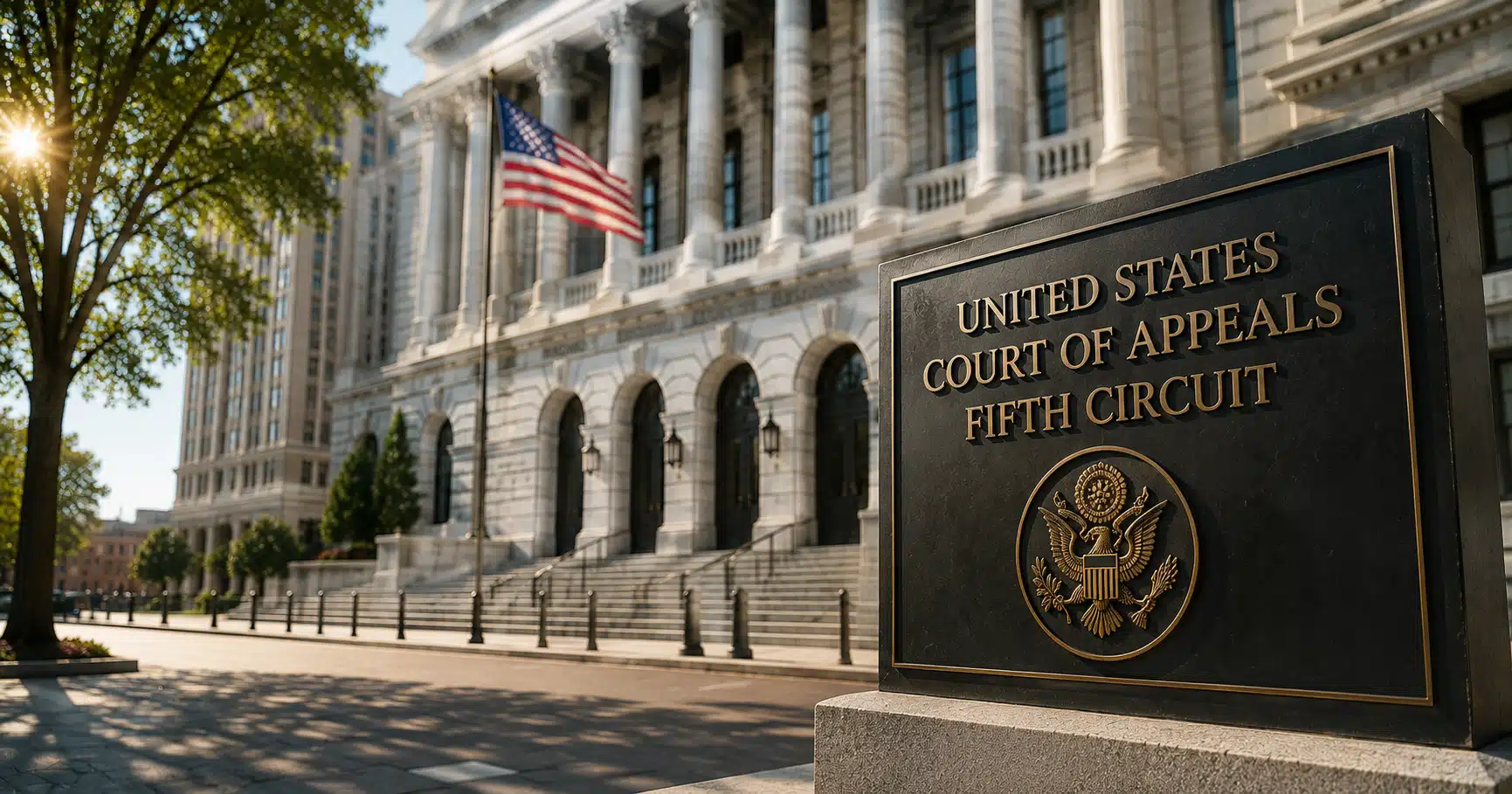
The Fifth Circuit hears federal appeals involving cases arising throughout Texas, Louisiana, and Mississippi, and its official courthouse is in New Orleans.
The Piri Law Firm represents immigration clients throughout the Dallas-Fort Worth area.
Clients in Tarrant County can learn more about working with a Fort Worth BIA appeals attorney.
Dallas-area clients can also find information about BIA representation near the firm’s Downtown Dallas, Oak Cliff, East Dallas, and Northwest Dallas locations.
Frequently Asked Questions After a BIA Denial
Is a BIA denial the end of my immigration case?
Not necessarily. Depending on the case, possible options may include federal judicial review, a motion to reconsider, a motion to reopen, or another legally available remedy.
What court reviews BIA decisions from Texas immigration cases?
Qualifying petitions for review involving immigration proceedings completed in Texas generally go to the U.S. Court of Appeals for the Fifth Circuit.
How long do I have to appeal a BIA decision to federal court?
A petition for review of a final removal order generally must be filed within 30 days.
Does filing a Fifth Circuit petition stop deportation?
Not automatically. A separate request for a stay of removal may need to be filed.
What is a motion to reconsider?
A motion to reconsider generally asks the BIA to correct an error of law or fact in its prior decision.
What is a motion to reopen?
A motion to reopen generally asks the BIA to reopen proceedings based on qualifying new facts or evidence.
How long do I have to file a motion to reopen?
For many cases, the general deadline is 90 days after the final administrative decision, although important exceptions apply.
Can I file a motion to reopen and a petition for review?
Potentially. However, each proceeding has separate requirements and deadlines, so filing one should not be assumed to preserve or extend the deadline for another.
Where is the Fifth Circuit located?
The Fifth Circuit’s official courthouse is at 600 Camp Street in New Orleans, Louisiana.
Talk to a Dallas-Fort Worth Immigration Appeals Attorney
A BIA denial can trigger some of the shortest and most consequential deadlines in an immigration case.
The question is no longer simply whether the immigration judge was wrong.
Counsel may need to determine whether the BIA itself committed a reviewable error, whether federal court jurisdiction exists, whether a stay is needed, and whether reopening or reconsideration provides another avenue for relief.
The Piri Law Firm represents immigrants throughout Dallas and Fort Worth in BIA appeals and complex immigration appellate matters.
Call (833) 600-0029 to discuss your case.
This article is for general informational purposes only and does not constitute legal advice. Federal court jurisdiction, stays of removal, motions, and appellate deadlines depend on the facts and procedural history of each case.