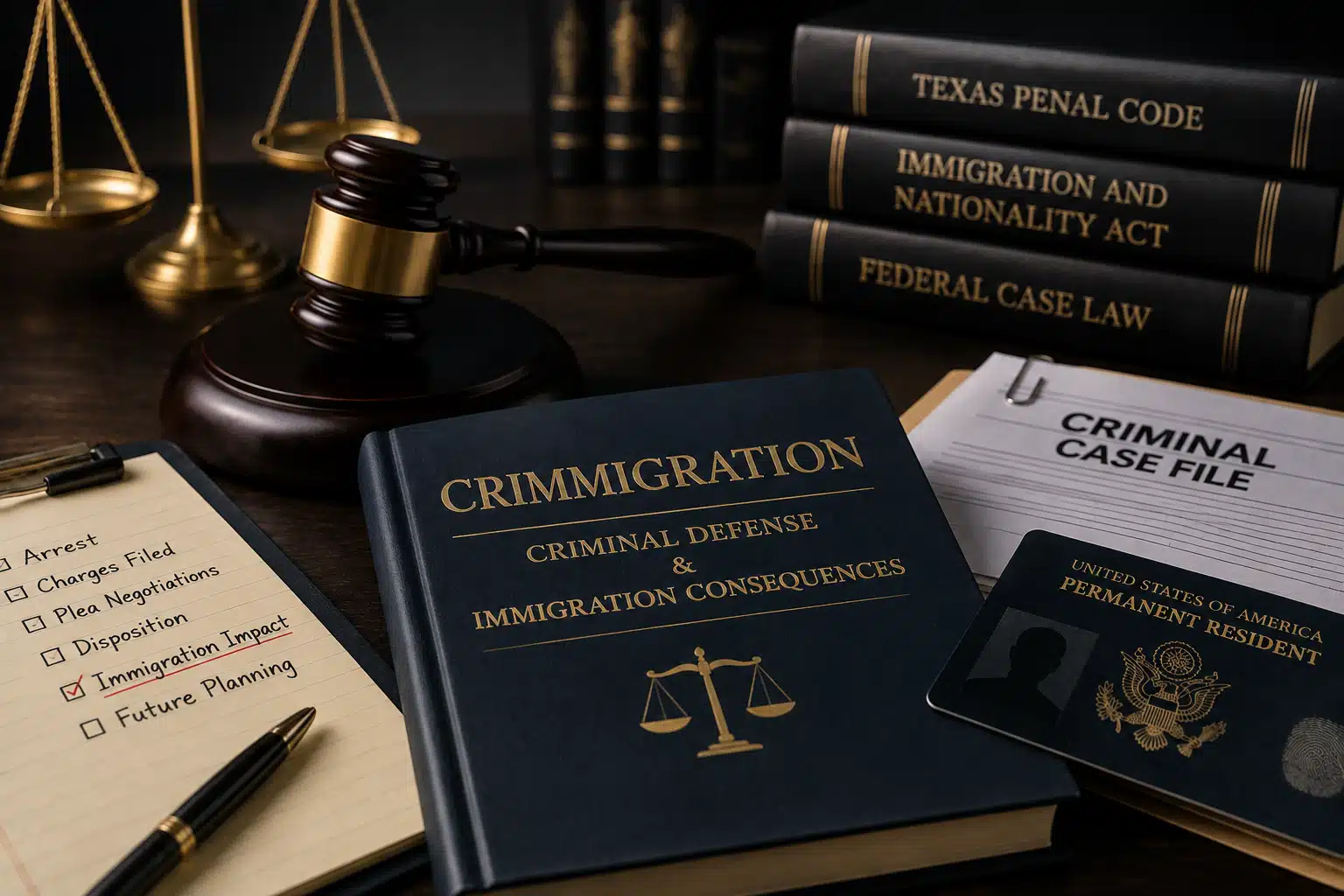

A theft charge in Dallas or Fort Worth can create serious immigration consequences for someone who is not a U.S. citizen.
Depending on the exact Texas offense and final disposition, a theft conviction can potentially affect deportability, admissibility, lawful permanent resident status, visas, naturalization, international travel, and eligibility for immigration relief.
The reason is that certain theft offenses may fall within immigration categories such as crimes involving moral turpitude, commonly called CIMTs. Some theft convictions can also create even more serious immigration consequences depending on the offense and sentence.
But a theft arrest does not automatically mean deportation.
The precise criminal statute, value of the property, alleged conduct, plea, sentence, criminal history, immigration status, and timing of prior offenses can all matter.
For a noncitizen, the immigration analysis should happen before the criminal case is resolved.
The Piri Law Firm’s Dallas-Fort Worth crimmigration practice focuses on this intersection between Texas criminal defense and federal immigration law.
Does a Theft Arrest Automatically Get You Deported?
No.
Being arrested does not mean someone has been convicted, and an arrest alone does not automatically establish that a noncitizen is deportable.
The prosecution must still prove the criminal case.
In a Texas theft prosecution, important issues may include:
- Whether property was actually stolen
- Whether the defendant possessed the required criminal intent
- Whether the property belonged to someone else
- Whether the defendant had permission
- The value of the property
- The reliability of witnesses
- Surveillance footage
- Statements made to police
- Identification evidence
- Whether the defendant actually participated in the alleged offense
For an immigrant, successfully challenging the criminal case can also prevent immigration consequences associated with a conviction.
Why Theft Charges Can Be Serious for Immigration
Immigration law does not classify criminal offenses exactly the same way Texas does.
One particularly important immigration category is a crime involving moral turpitude.
Certain theft offenses may fall within this category depending on the statutory elements and applicable federal immigration law.
That can matter because crimes involving moral turpitude can potentially affect:
- Deportability
- Admissibility
- Adjustment of status
- Visa applications
- Naturalization
- Immigration relief
But simply seeing the word “theft” on a charging document does not provide the complete immigration answer.
The specific statute and disposition must be analyzed.
What Is a Crime Involving Moral Turpitude?
“Crime involving moral turpitude” is a federal immigration-law concept.
It is not simply another name for a Texas felony or misdemeanor.
Whether an offense qualifies generally depends on the legal elements of the crime and how federal immigration law treats those elements.
This distinction matters.
A defendant might receive a relatively minor sentence in Texas criminal court while still facing a potentially significant immigration issue.
That is why the criminal punishment alone cannot determine whether a plea is safe for a noncitizen.
Can a Misdemeanor Theft Charge Cause Deportation?
Potentially, depending on the circumstances.
Calling an offense a misdemeanor does not automatically make it harmless for immigration purposes.
Federal immigration law has its own rules concerning criminal convictions.
The immigration consequences can depend on factors including:
- The exact offense
- Maximum possible punishment
- Actual sentence
- Date of admission to the United States
- Date of the offense
- Prior criminal history
- Whether an exception applies
- Immigration status
A noncitizen should therefore avoid relying on statements such as:
“It’s only a misdemeanor.”
That may describe the Texas criminal classification without answering the immigration question.
What Is the Petty Offense Exception?
Some noncitizens may hear about the “petty offense exception” when discussing crimes involving moral turpitude.
A limited exception exists in certain inadmissibility situations when specific statutory requirements are satisfied.
Whether it applies depends on factors such as the offense and sentencing parameters.
It should not be assumed to apply simply because a case is called a misdemeanor or because the defendant received probation.
The exception is technical and does not necessarily solve every immigration problem arising from a criminal case.
An individualized analysis is necessary.
Can Shoplifting Affect Immigration Status?
Potentially.
Shoplifting may be prosecuted as theft under Texas law depending on the circumstances.
Someone may believe a low-dollar shoplifting case is insignificant because the property had little value.
From an immigration perspective, however, the dollar amount does not necessarily answer the central question.
The immigration analysis may focus heavily on the elements of the offense and the criminal disposition.
That means even a relatively low-level shoplifting charge deserves careful review when the accused person is not a U.S. citizen.
Can Theft Affect a Green Card?
Yes.
Lawful permanent residents can face immigration consequences from certain criminal convictions.
A green card is not absolute protection against removal.
Depending on the offense and the person’s immigration history, a theft conviction may create questions involving:
- Deportability
- Admissibility
- International travel
- Reentry into the United States
- Naturalization
- Eligibility for immigration relief
Green card holders charged with theft should therefore tell their criminal defense attorney about their immigration status immediately.
The defense strategy should consider both the criminal and immigration consequences.
Can Felony Theft Get You Deported?
Potentially, yes.
Felony theft allegations deserve particularly careful analysis.
But the word “felony” alone does not determine the federal immigration consequence.
Immigration law uses its own categories and definitions.
Depending on the offense and sentence, certain theft convictions can potentially raise aggravated-felony issues under federal immigration law.
That classification can create extremely serious consequences.
For that reason, the exact offense of conviction and sentence can be critically important.
Why a One-Year Sentence Can Matter
Sentencing details can be extremely important in crimmigration cases.
For certain immigration categories, the sentence imposed can affect how a conviction is classified.
This is another reason a criminal plea should not be evaluated solely according to whether the defendant will physically serve time in jail.
Immigration law may evaluate sentencing in ways that are not obvious to someone focused only on the immediate criminal punishment.
Defense counsel representing a noncitizen should therefore understand the potential immigration impact of both the offense and proposed sentence.
Can Deferred Adjudication for Theft Affect Immigration?
Potentially, yes.
Texas defendants sometimes assume deferred adjudication means the case cannot count as a conviction for immigration purposes.
That assumption can be dangerous.
Federal immigration law contains its own definition of conviction.
Certain dispositions involving a guilty or no-contest plea or admission combined with punishment, a penalty, or restraint can potentially qualify as convictions for immigration purposes.
A defendant therefore should not accept deferred adjudication based solely on the belief that:
“It isn’t a conviction.”
The immigration analysis must occur separately.
What If the Theft Charge Is Reduced?
A reduction can be extremely important, but the new charge must still be analyzed.
For a noncitizen, the question is not simply whether prosecutors reduced a felony to a misdemeanor.
The correct questions include:
- What is the new offense?
- What are its statutory elements?
- What sentence is being imposed?
- How will immigration law classify it?
- Does the new disposition create deportability?
- Does it create inadmissibility?
- Could it affect future immigration benefits?
The firm’s Dallas-Fort Worth criminal defense practice can address the criminal case while the immigration consequences of potential resolutions are evaluated.
Can Theft Lead to ICE Detention?
Potentially.
When a noncitizen is arrested and booked into a Dallas County, Tarrant County, or other local jail, immigration authorities may become aware of the arrest.
Depending on the person’s status and history, ICE may become involved.
Posting a criminal bond does not necessarily guarantee that the person will immediately return home.
An immigration detainer or transfer into immigration custody may create a separate detention issue.
At that point, the person may simultaneously face:
- A Texas criminal prosecution
- Immigration detention
- Removal proceedings
These proceedings require coordinated legal strategy.
Can You Get Immigration Bond After a Theft Arrest?
It depends on the individual circumstances.
Immigration bond eligibility can depend on:
- Immigration status
- Criminal history
- The exact offense
- Prior convictions
- Prior removal proceedings
- Existing removal orders
- The legal basis for detention
Some people may be eligible to request an immigration bond.
Others may face mandatory-detention issues.
A lawyer must review the complete criminal and immigration history before determining what options may exist.
Can Theft Affect DACA?
Potentially.
DACA contains criminal-history requirements.
The effect of a theft conviction depends on the classification and circumstances of the case as well as any additional criminal history.
Someone with DACA should therefore disclose that status to criminal counsel before entering a plea.
A disposition that looks favorable in Texas court may have consequences for immigration status or deferred action.
Can Theft Affect Naturalization?
Yes.
USCIS reviews criminal history when evaluating naturalization applications.
Criminal conduct involving dishonesty or theft can be particularly important in the good-moral-character analysis.
The effect depends on the offense, timing, disposition, sentence, and broader history.
A permanent resident with a theft arrest or conviction should therefore have the record reviewed before applying for citizenship.
The firm’s immigration law practice can evaluate these broader immigration issues.
Can You Travel With a Theft Conviction?
International travel can create additional concerns for some lawful permanent residents with criminal histories.
A green card holder should not assume that successfully traveling in the past guarantees that future travel will be problem-free.
A criminal conviction can potentially raise admissibility questions when a permanent resident returns to the United States under circumstances specified by federal immigration law.
Before traveling internationally, the criminal record and immigration history should be reviewed.
What If You Were Wrongly Accused of Shoplifting?
An arrest does not establish guilt.
Shoplifting cases can involve factual disputes.
For example, a defense may involve questions about:
- Intent
- Whether merchandise was actually concealed
- Whether the person attempted to pay
- Self-checkout mistakes
- Identification
- Surveillance footage
- Store policies
- Witness reliability
- Whether another person possessed the merchandise
Retail theft investigations increasingly rely on surveillance footage and electronic transaction records.
Those records should be examined rather than simply accepting the store’s accusation.
For a noncitizen, challenging a weak case can have importance well beyond avoiding a criminal record.
What If the Theft Case Is Dismissed?
A dismissal can substantially improve the situation.
If the charge is dismissed, obtain certified documentation showing exactly how the case ended.
Keep those records permanently.
They may be needed later for:
- Naturalization
- Adjustment of status
- Visa applications
- Green card matters
- Immigration court
- International travel
Immigration authorities may know that an arrest occurred even when the prosecution was dismissed.
Documentation of the final disposition can therefore be important years later.
What If You Already Pleaded Guilty to Theft?
Do not assume deportation is automatic or that nothing can be done.
The first step is to obtain the complete criminal record.
That may include:
- Charging documents
- Plea paperwork
- Judgment
- Sentence
- Probation documents
- Court docket
- Orders affecting the case
Immigration counsel can then determine exactly what happened and analyze the immigration consequences.
Depending on the circumstances, potential immigration defenses, relief, or post-conviction options may need to be investigated.
Why Crimmigration Strategy Matters Before the Plea
The best time to analyze immigration consequences is generally before the criminal case is resolved.
At that stage, defense counsel may still be negotiating with prosecutors.
Once a plea has been entered, options may become more limited.
For a noncitizen, plea negotiations should therefore consider:
- Criminal exposure
- Immigration consequences
- Sentence
- Immigration detention
- Travel
- Naturalization
- Future immigration applications
- Potential removal proceedings
Criminal defense and immigration defense should not operate independently when the client’s future in the United States may depend on the criminal outcome.
What Should an Immigrant Do After a Theft Arrest in Dallas or Fort Worth?
Tell your criminal defense attorney immediately that you are not a U.S. citizen.
Identify your exact immigration status.
Disclose all previous arrests and convictions.
Tell counsel about prior immigration cases or removal orders.
Do not accept a plea simply because prosecutors call it a misdemeanor or offer probation.
Preserve all criminal records and evidence.
Most importantly, obtain an immigration analysis before resolving the case.
Frequently Asked Questions About Theft Charges and Immigration
Can a Theft Charge Get You Deported in Texas?
A theft charge alone does not automatically result in deportation. However, certain theft convictions can create immigration consequences, including issues involving crimes of moral turpitude or, in some circumstances, aggravated-felony classifications.
Can a Green Card Holder Be Deported for Theft?
Potentially. Lawful permanent residents can be subject to removal based on certain criminal convictions. The precise theft statute, sentence, immigration history, and other circumstances must be analyzed.
Is Shoplifting a Deportable Offense?
Shoplifting may potentially create immigration consequences depending on the statute of conviction and circumstances. The relatively low value of merchandise does not automatically make the offense harmless under immigration law.
Can a Misdemeanor Theft Affect Immigration?
Yes. A misdemeanor classification under Texas law does not automatically prevent immigration consequences. Federal immigration law uses its own standards for evaluating criminal convictions.
Does Deferred Adjudication Protect Me From Immigration Consequences?
Not necessarily. Federal immigration law has its own definition of conviction, and certain Texas deferred-adjudication dispositions may still qualify as convictions for immigration purposes.
Can a Theft Conviction Affect My Citizenship Application?
Yes. USCIS examines criminal history and good moral character during naturalization. Theft-related conduct or convictions may therefore affect a citizenship application depending on the circumstances.
Can ICE Detain Me After a Theft Arrest?
Potentially. Immigration authorities may become involved when a noncitizen is arrested and booked into local custody. The person’s immigration status and criminal history can affect what happens next.
What Should I Do If My Theft Case Was Dismissed?
Obtain certified documentation showing the dismissal and keep it permanently. Those records may later be needed for naturalization, immigration applications, travel, or immigration proceedings.
Talk to a Dallas-Fort Worth Crimmigration Lawyer Before Accepting a Theft Plea
A theft case that appears relatively minor in Texas criminal court can have much larger consequences for a noncitizen.
The offense of conviction, plea language, sentence, and criminal history can potentially determine whether the case creates an immigration problem.
The time to analyze those consequences is before accepting the plea.
The Piri Law Firm represents immigrants facing criminal charges throughout Dallas and Fort Worth and evaluates Texas criminal defense strategy together with federal immigration consequences.
Call (833) 600-0029 for a confidential consultation.
Hablamos Español.