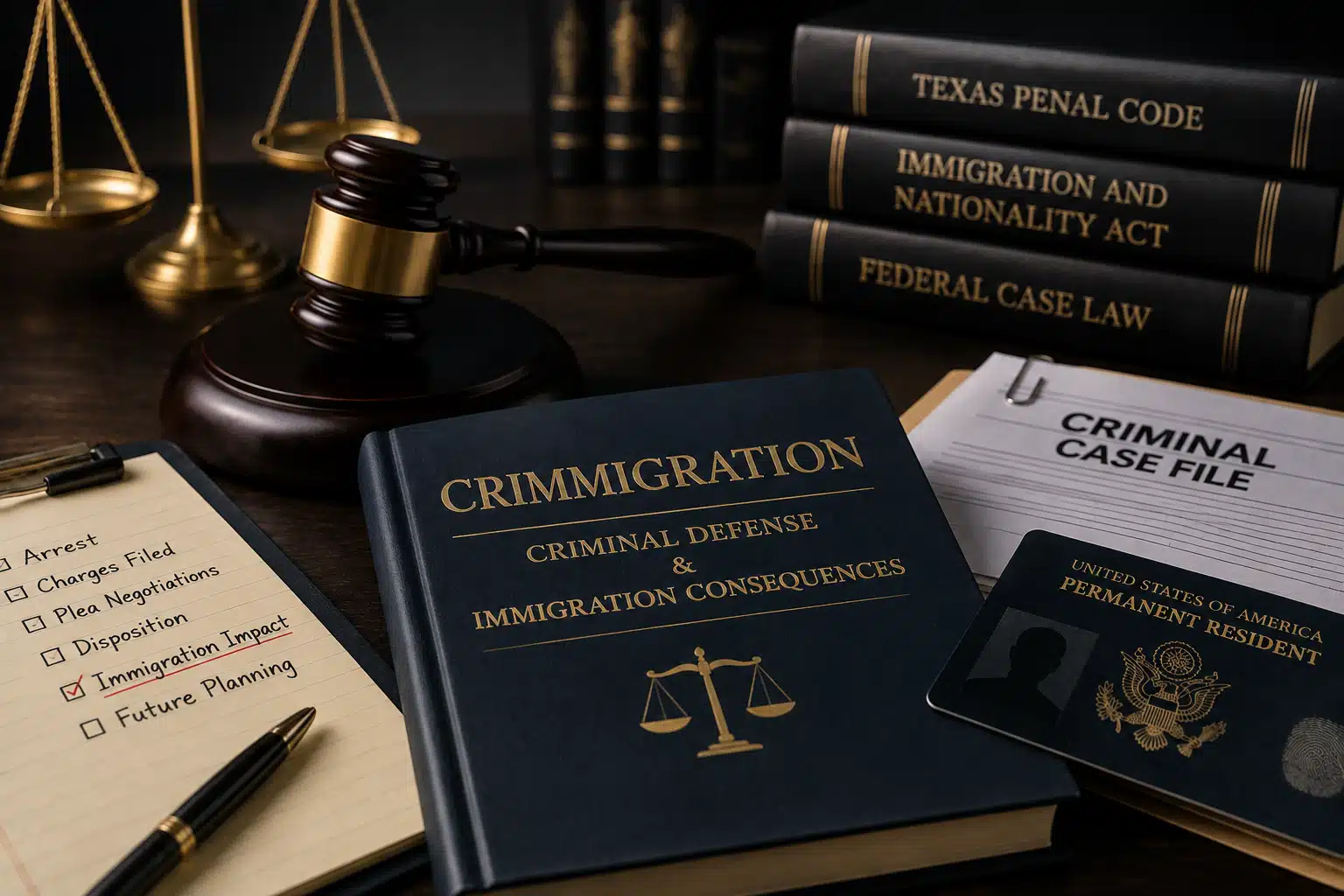

A DWI arrest in Texas can be frightening for anyone. For an immigrant living in Dallas or Fort Worth, however, the stakes may extend far beyond fines, probation, a driver’s license suspension, or jail.
A DWI can potentially affect immigration status, detention, admissibility, naturalization, and future immigration applications, depending on the specific facts of the case.
The important point is that there is no universal rule that every Texas DWI automatically results in deportation.
Instead, immigration consequences depend on factors such as the exact criminal charge, whether aggravating circumstances are alleged, the final disposition, other criminal history, and the person’s immigration status.
That is why a non-U.S. citizen charged with DWI should not evaluate a plea agreement solely by asking whether it keeps them out of jail.
The Piri Law Firm’s Dallas-Fort Worth crimmigration practice focuses on the intersection between Texas criminal defense and federal immigration law when a criminal charge may put a person’s ability to remain in the United States at risk.
Does a DWI Automatically Cause Deportation?
No.
A Texas DWI does not automatically mean that every noncitizen will be deported.
Immigration law is considerably more complicated than that.
The consequences can depend on:
- The exact Texas offense
- Whether drugs were involved
- Whether someone was injured
- Whether a child passenger was involved
- Whether there are prior DWI convictions
- Whether there are other criminal convictions
- The sentence imposed
- The person’s current immigration status
- The person’s immigration history
- Whether the person is applying for an immigration benefit
- Whether removal proceedings already exist
This is why two people arrested for DWI on the same night could face very different immigration consequences.
The criminal case and the immigration case must be analyzed together.
A DWI Arrest Is Not the Same as a DWI Conviction
This distinction is critical.
Being arrested for DWI does not mean someone has been convicted.
Police may believe they have probable cause to make an arrest, but the prosecution must still prove the criminal case.
Depending on the facts, a DWI defense may involve questions about:
- The legality of the traffic stop
- Field sobriety testing
- Breath-test procedures
- Blood-test procedures
- Probable cause
- Whether the person was actually operating the vehicle
- Video evidence
- Witness testimony
- Laboratory procedures
- The reliability of chemical testing
For a noncitizen, aggressively investigating these issues can have importance beyond avoiding a Texas criminal conviction.
The outcome may also influence immigration consequences.
Why Immigration Status Changes the DWI Defense Strategy
For a U.S. citizen, a criminal defense attorney may primarily evaluate the criminal consequences of a proposed plea.
For a noncitizen, that is not enough.
The attorney must also consider how the criminal disposition could interact with federal immigration law.
Suppose a prosecutor offers a resolution that eliminates jail time.
That may appear to be a good outcome.
But the analysis cannot stop there.
The defense should also ask:
What will this disposition mean for immigration?
This is the core of crimmigration law.
The goal is not merely to resolve the criminal case. The goal is to understand how the criminal resolution could affect the client’s ability to remain in the United States.
Immigrants facing criminal allegations can learn more about this combined strategy through the firm’s Dallas-Fort Worth criminal defense practice.
Can a First DWI Affect Immigration Status?
Potentially.
A straightforward first-time alcohol-related DWI does not necessarily produce the same immigration consequences as other criminal offenses.
But that does not mean a first DWI should be considered immigration-safe.
The surrounding facts matter.
Immigration consequences can become substantially more complicated when a case includes additional allegations or offenses.
Examples can include:
- Controlled substances
- Injury to another person
- A child passenger
- Driving while a license is invalid
- Evading police
- Weapons
- Other criminal charges arising from the stop
The person’s existing criminal and immigration history also matters.
A lawyer therefore needs to examine the actual record rather than relying on the label “first DWI.”
DWI With a Child Passenger Can Create Additional Immigration Concerns
Texas treats DWI cases involving child passengers differently from an ordinary DWI.
For immigration purposes, additional allegations involving a child can require careful analysis.
The government may examine the particular statute, conduct, conviction, and record when determining whether immigration consequences apply.
A noncitizen facing this type of charge should therefore obtain a crimmigration analysis before entering a plea.
What appears to be a straightforward negotiated criminal disposition may have consequences that are not obvious from the Texas punishment alone.
What If Drugs Were Involved in the DWI?
Drug-related allegations can significantly change the immigration analysis.
Federal immigration law contains particularly serious provisions concerning controlled substances.
If a traffic stop produces both a DWI allegation and a drug-possession charge, the immigration risk may come less from the DWI itself and more from the accompanying controlled-substance offense.
For example, police may arrest a driver for suspected intoxication and then discover a controlled substance during a vehicle search.
Now the person potentially faces two separate criminal allegations.
For a noncitizen, the drug charge may create serious immigration concerns.
This is why every charge arising from the arrest must be analyzed independently.
Can a Felony DWI Affect Immigration Status?
Felony-level DWI cases require especially careful analysis.
In Texas, circumstances such as prior DWI convictions can elevate the criminal exposure, and some intoxication-related offenses involving injury or death carry severe penalties.
The immigration consequences of any resulting conviction depend on the precise statute and circumstances.
The label “felony” alone does not answer the immigration question.
Federal immigration law uses its own classifications and definitions.
The correct analysis requires comparing the Texas statute and criminal record with federal immigration law.
Can DWI Lead to ICE Detention?
A DWI arrest can potentially bring a noncitizen into contact with immigration authorities, particularly when the person is booked into a local jail.
That does not mean every immigrant arrested for DWI will be detained by ICE.
But immigration status and history can become relevant while someone is in criminal custody.
If immigration authorities become involved, a person who expects to leave county jail after posting bond or completing the criminal release process may instead encounter an immigration detainer or transfer.
Families can suddenly find themselves dealing with both the criminal court system and federal immigration detention.
The possibility of immigration custody is one reason noncitizens should tell their attorney about their immigration status immediately.
What Happens If ICE Places a Detainer After a DWI Arrest?
An ICE detainer can complicate release from local criminal custody.
The criminal bond and immigration detention issues are separate.
Posting a Dallas County or Tarrant County criminal bond does not necessarily resolve an immigration custody issue.
If the person is transferred to immigration custody, counsel may need to determine:
- The legal basis for detention
- Whether the person is eligible to request an immigration bond
- Whether removal proceedings are pending
- Whether there is an existing removal order
- Whether criminal history affects eligibility for release
- Whether other immigration relief may be available
The criminal case may continue while the person is dealing with immigration proceedings.
That makes coordination between criminal and immigration strategy particularly important.
Can DWI Affect a Green Card Holder?
Yes, a DWI can create concerns for a lawful permanent resident even when it does not automatically result in loss of permanent resident status.
Green card holders should not assume that permanent residence makes criminal charges irrelevant to immigration.
The government may examine criminal history in several contexts.
A permanent resident may encounter issues involving:
- Removal proceedings
- International travel
- Reentry into the United States
- Naturalization
- Immigration applications
- Other criminal convictions
The complete record must be reviewed.
Someone with a green card who has been arrested should also understand the broader issues discussed in the firm’s guidance on criminal charges and immigration consequences.
Can DWI Affect a Visa Holder?
Potentially.
People living in the United States on temporary visas can face a different set of concerns from lawful permanent residents.
A criminal arrest can interact with visa status, future visa applications, travel, and admissibility.
The exact consequences depend on the visa classification, criminal allegations, disposition, and other circumstances.
Visa holders should therefore obtain individualized immigration advice before assuming that resolving the Texas criminal case resolves the immigration issue.
Can a DWI Affect DACA?
A DWI can create particularly serious concerns for someone who has or is seeking Deferred Action for Childhood Arrivals.
DACA eligibility involves criminal-history requirements.
Because criminal classifications used for immigration programs do not always mirror how defendants casually describe Texas offenses, someone with DACA should obtain immigration advice immediately after a DWI arrest.
The criminal defense strategy should account for the person’s DACA situation before a plea is entered.
Can DWI Affect Naturalization?
Yes.
A DWI can potentially become relevant when a lawful permanent resident later applies for U.S. citizenship.
Naturalization involves an examination of eligibility that includes good moral character during the applicable statutory period.
USCIS can review criminal conduct when deciding a naturalization application.
The effect of a DWI depends on the circumstances, including whether there are multiple incidents, aggravating factors, other criminal conduct, probation, and the timing of the case.
A permanent resident considering naturalization after a DWI should have the criminal record reviewed before filing the application.
Should You Travel Internationally After a DWI?
Noncitizens with criminal records should be cautious about international travel.
The effect of travel depends on the person’s immigration status and criminal history.
A DWI by itself does not produce the same travel consequences in every case.
However, if the DWI involved controlled substances or occurred alongside another potentially immigration-significant offense, the analysis can change dramatically.
Before leaving the United States, it may be prudent to have the complete criminal disposition reviewed by an immigration attorney.
Why the Exact Plea Language Matters
Criminal defendants often focus on the sentence:
“How much jail?”
“How much probation?”
“How much is the fine?”
Those questions matter.
For an immigrant, however, another question can be equally important:
Exactly what am I pleading guilty or no contest to?
Federal immigration authorities may examine the statute of conviction and legally relevant portions of the criminal record when determining immigration consequences.
That means defense strategy may sometimes involve not only reducing punishment but also carefully evaluating the offense of conviction and the record created by the plea.
This is why immigration analysis should occur before the plea is finalized.
What Should an Immigrant Do Immediately After a DWI Arrest?
If you are not a U.S. citizen and have been arrested for DWI in Dallas or Fort Worth, there are several steps you should take quickly.
First, tell your criminal defense attorney your exact immigration status.
Do not assume the attorney already knows.
Second, avoid accepting a plea until the potential immigration consequences have been analyzed.
Third, preserve all paperwork connected with the arrest and criminal case.
Fourth, make sure your attorney knows about any previous arrests, convictions, immigration proceedings, or removal orders.
Finally, avoid relying on general statements such as:
“A DWI doesn’t affect immigration.”
The correct answer depends on the facts.
Why Crimmigration Counsel Matters in a Texas DWI Case
Criminal law and immigration law are separate legal systems.
But for a noncitizen charged with a crime, they collide.
A traditional criminal defense strategy may focus on:
- Avoiding jail
- Reducing charges
- Minimizing probation
- Protecting a driver’s license
- Obtaining dismissal
A crimmigration strategy adds another question:
How could each possible criminal outcome affect immigration status?
That analysis may involve lawful permanent residence, visas, DACA, admissibility, deportability, naturalization, immigration detention, or potential immigration relief.
The Piri Law Firm’s immigration practice and criminal defense representation allow these overlapping issues to be evaluated as part of a coordinated strategy.
Frequently Asked Questions About DWI and Immigration in Texas
Can You Be Deported for a First DWI in Texas?
A first Texas DWI does not automatically mean every noncitizen will be deported. The immigration consequences depend on the exact offense, surrounding conduct, other criminal history, immigration status, and final disposition. Aggravating circumstances or additional charges can significantly change the analysis.
Is a Texas DWI a Crime Involving Moral Turpitude?
The immigration classification of a criminal offense requires analysis of the specific statute and circumstances. A defendant should not assume that every DWI is automatically classified the same way for immigration purposes.
Can ICE Pick Me Up After a DWI Arrest in Dallas?
ICE involvement is possible depending on the person’s immigration status and history. An immigrant released from criminal custody may encounter an immigration detainer or immigration custody issue in some circumstances.
Does Posting Bond Stop ICE From Detaining Me?
Not necessarily. Criminal custody and immigration custody are separate. Posting a criminal bond does not automatically resolve an immigration detainer or other federal immigration detention issue.
Can a DWI Affect My Green Card?
Yes, depending on the circumstances. A DWI and related criminal conduct can become relevant to removal proceedings, travel, naturalization, and other immigration matters. Green card holders should have the complete case reviewed.
Can a DWI Affect My Citizenship Application?
Potentially. USCIS examines good moral character and criminal history during naturalization. The effect depends on factors such as the circumstances of the offense, timing, multiple incidents, probation, and other criminal history.
Is DWI More Serious for Immigration If Drugs Are Involved?
Potentially, yes. Controlled-substance offenses can create significant immigration consequences. A DWI arrest accompanied by a drug charge therefore requires particularly careful immigration analysis.
Should I Tell My DWI Lawyer That I Am Not a U.S. Citizen?
Yes. Your attorney needs to know your immigration status before advising you about a plea or other criminal disposition. Immigration consequences should be evaluated before the criminal case is resolved.
Talk to a Dallas-Fort Worth Crimmigration Lawyer About a DWI Arrest
A DWI arrest can affect far more than your driver’s license when you are not a U.S. citizen.
The criminal case may influence your immigration status, ability to travel, eligibility for immigration benefits, naturalization plans, or exposure to immigration detention.
The most important time to identify those risks is before the criminal case is resolved.
The Piri Law Firm represents immigrants facing criminal charges throughout Dallas and Fort Worth and evaluates the criminal and immigration consequences together.
Call (833) 600-0029 for a confidential consultation.
Hablamos Español.